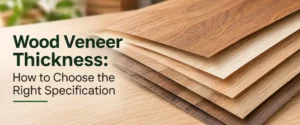
Choosing the right wood veneer thickness is an important decision for furniture manufacturers, plywood producers, and wholesale buyers. The thickness affects surface quality, sanding allowance, material consumption, and production efficiency. However, the best specification depends on the final application rather than simply choosing the thickest or thinnest option.
For manufacturers, understanding the differences between decorative veneer, plywood face veneer, and core veneer helps ensure that purchased materials meet production requirements. This guide explains how to select suitable veneer thickness and what to include in a purchasing specification.
Why Does Wood Veneer Thickness Matter?
Wood veneer thickness influences both the appearance and performance of finished wood products. Manufacturers need to consider how the veneer will interact with the substrate, adhesives, pressing conditions, and finishing processes.
For example, decorative veneer used on cabinet doors needs to provide a consistent surface for finishing. Plywood manufacturers, on the other hand, must consider veneer thickness when planning panel construction, total thickness, and the number of plies.
Thickness consistency also matters. Significant variations between veneer sheets can create uneven surfaces and complicate sanding, gluing, and pressing. Therefore, buyers should evaluate both nominal thickness and allowable tolerance when sourcing veneer.
Common Wood Veneer Thickness Options
Wood veneer comes in different thicknesses depending on the cutting method, wood species, manufacturing process, and intended application.
Common decorative veneer specifications include approximately 0.3 mm, 0.5 mm, and 1.0 mm. These are examples of commonly encountered options rather than universal industry standards. Some suppliers also offer thinner or thicker materials according to customer requirements.
Plywood production uses different veneer specifications. Face, back, and core veneers may have different thickness requirements depending on the panel structure and manufacturing process.
When comparing suppliers, buyers should confirm the available thickness range, production tolerance, and whether the quoted measurement refers to the actual or nominal thickness.
How to Choose Wood Veneer Thickness for Different Applications
The right wood veneer thickness depends mainly on the product being manufactured.
1. Decorative Veneer for Furniture
Furniture manufacturers commonly use decorative veneer for cabinet doors, wardrobes, tabletops, shelving, and interior panels.
Thinner veneer can help reduce material consumption and provide a natural wood appearance on suitable substrates. However, manufacturers should consider the finishing process and the amount of sanding required.
Thicker decorative veneer may provide more material for surface preparation and refinishing. It can also suit applications where the production process requires additional sanding allowance.
Before ordering, buyers should evaluate the substrate, adhesive system, surface preparation, and final finishing requirements.
2. Face and Back Veneer for Plywood
Plywood manufacturers use face and back veneers to create the outer surfaces of panels. These layers influence the panel’s appearance, surface quality, and suitability for further processing.
The required thickness depends on the intended plywood grade, panel construction, sanding requirements, and customer specifications.
For decorative plywood, manufacturers may prioritize surface appearance and consistent veneer thickness. For general-purpose plywood, production efficiency and overall panel construction may receive greater attention.
3. Core Veneer for Plywood Manufacturing
Core veneer forms the internal layers of plywood. Unlike decorative face veneer, its primary role is to contribute to the panel structure.
Manufacturers should consider core thickness when planning the number of plies, total panel thickness, and pressing process. Consistent core veneer also helps maintain more predictable panel construction.
The appropriate specification depends on the plywood thickness, wood species, production equipment, and required product performance.
5 Factors to Consider When Choosing Veneer Thickness
Before placing an order, manufacturers should evaluate these five factors.
1. Sanding and Finishing Requirements
Consider how much material the production process may remove during sanding. Thin veneer requires careful surface preparation to avoid excessive material loss.
2. Substrate and Panel Construction
The substrate influences which veneer specifications are suitable. Furniture manufacturers should check compatibility with MDF, plywood, particleboard, or other panel materials.
3. Gluing and Pressing Requirements
Adhesive application and pressing conditions can affect the finished panel. Buyers should confirm that the selected veneer works with their production process.
4. Thickness Tolerance and Consistency
A supplier should clearly state the nominal thickness and acceptable thickness variation. Consistent measurements help manufacturers reduce production adjustments and maintain stable product quality.
For more details about inspection methods and quality checks, see our guide to Wood Veneer Quality Inspection.
5. Wood Species and Cutting Methods
Different wood species and cutting methods can produce different veneer characteristics. Buyers should consider grain appearance, flexibility, intended use, and available manufacturing specifications.
For example, manufacturers sourcing Okoume veneer should also evaluate its available grades and surface characteristics. See our guide to Okoume Veneer Grades for more information.
How to Specify Wood Veneer Thickness When Ordering
A clear purchasing specification helps suppliers understand your requirements and reduces misunderstandings during production.
When requesting a quotation, provide the following information:
- Wood species: Specify Okoume, Birch, or another required species.
- Nominal thickness: State the required thickness in millimeters.
- Thickness tolerance: Define the acceptable variation.
- Dimensions: Confirm sheet length and width.
- Veneer grade: Specify the required appearance and quality level.
- Cutting method: Indicate rotary-cut, sliced, or another required type.
- Application: Explain whether the veneer is for furniture, plywood face layers, or core construction.
- Quantity: Provide the estimated order volume.
If your production process has specific sanding, gluing, or pressing requirements, share these details with the supplier before confirming the order.
Choose the Right Wood Veneer Specification for Your Production
Selecting the right wood veneer thickness requires balancing material cost, surface quality, processing requirements, and final product specifications. Furniture manufacturers should focus on finishing and substrate compatibility, while plywood producers need to consider face and core construction.
At HuixinWood, we supply wood veneer for furniture manufacturing, plywood production, and other woodworking applications. Contact our team to discuss your required wood species, thickness, dimensions, and order specifications.
Contact HuixinWood to request a quotation and find a suitable veneer specification for your production needs.