Timber moisture content is one of the most important specifications to check when purchasing sawn timber for international markets. It affects dimensional stability, machining performance, storage conditions, and the quality of finished wood products. For importers, wholesalers, and furniture manufacturers, choosing timber with the appropriate moisture level can help reduce material waste and avoid problems during production.
However, there is no single moisture content requirement for every timber product. The right specification depends on the wood species, intended application, processing requirements, and environment where the timber will be used. This guide explains how to understand, measure, and specify timber moisture content before placing an export order.
What Is Timber Moisture Content?
Timber moisture content refers to the amount of water contained in wood compared with its oven-dry weight. It is normally expressed as a percentage.
The calculation is:
Moisture Content (%) = [(Wet Weight − Oven-Dry Weight) / Oven-Dry Weight] × 100
For example, if a timber sample weighs 110 grams before drying and 100 grams after oven drying, its moisture content is 10%.
Moisture content is important because wood naturally absorbs and releases moisture depending on surrounding temperature and humidity. As its moisture level changes, timber can expand or shrink. This movement may affect the dimensions, appearance, and performance of the final product.
When sourcing sawn timber, buyers should therefore consider moisture content alongside wood species, grade, dimensions, and surface condition.
Why Does Moisture Content Matter When Buying Timber?
The moisture level of timber can influence several aspects of manufacturing and end-use performance.
1. Dimensional Stability
Wood expands when it absorbs moisture and shrinks when it loses moisture. Excessive moisture changes can cause boards to twist, cup, or warp. These problems may create difficulties during furniture assembly, flooring installation, and other precision woodworking processes.
2. Cracking and Splitting
When timber dries too quickly or unevenly, internal stresses can develop. These stresses may lead to surface checks, end splits, or other drying defects. Controlling moisture changes helps reduce these risks.
3. Mold and Storage Problems
Timber stored in damp conditions may become vulnerable to mold growth, particularly when ventilation is poor. Moisture management during storage and transportation is therefore important for maintaining product condition.
4. Machining and Manufacturing Performance
Timber with unsuitable moisture levels may not maintain consistent dimensions during cutting, planing, drilling, and assembly. For manufacturers, this can affect production accuracy and material utilization.
What Is the Right Moisture Content for Timber?
There is no universal moisture content target for all timber products. The required level depends on the final application and the conditions in which the wood will be used.
For example:
- Furniture manufacturing: Timber should be conditioned to suit the expected indoor environment and manufacturing requirements.
- Construction: Moisture specifications should consider the structural application, local building requirements, and installation conditions.
- Packaging: Buyers should define moisture requirements according to storage, transportation, and the intended service conditions.
- Interior woodworking: Stable moisture levels are important because indoor temperature and humidity changes can affect finished components.
The equilibrium moisture content (EMC) is also worth understanding. It describes the moisture level wood gradually approaches when exposed to a particular temperature and relative humidity.
For export buyers, the best approach is to agree on a target moisture range with the supplier before production. Avoid applying one fixed percentage to every species and application.
How to Measure Timber Moisture Content
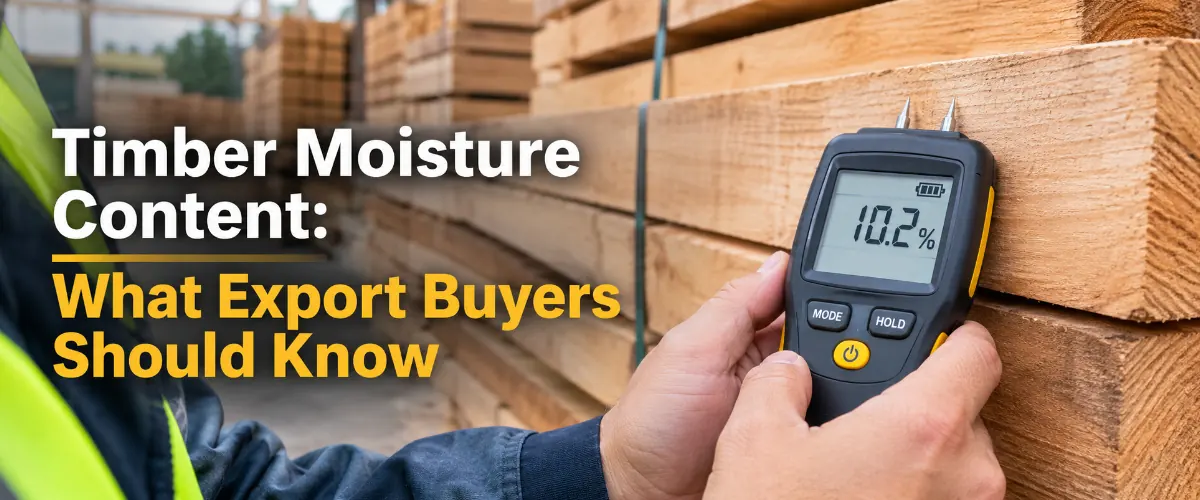
A moisture meter is one of the most practical tools for checking timber moisture content before shipment.
Two common types are used:
Pin-Type Moisture Meter
This instrument uses two metal pins inserted into the wood. It measures electrical resistance between the pins to estimate moisture content. Readings can vary with measurement depth, wood species, and temperature.
Pinless Moisture Meter
This type uses an electromagnetic sensor to estimate moisture without penetrating the wood surface. It is useful for checking multiple boards quickly, although readings can be influenced by wood density, thickness, and surface conditions.
For more reliable inspection, buyers should consider the following practices:
- Check several boards from different positions in the shipment.
- Take readings at multiple locations on each selected board.
- Avoid relying only on the surface reading.
- Use the correct wood species setting when supported by the meter.
- Record the measurement results before shipment.
For high-value orders or disputed results, an agreed reference test method, such as oven-dry testing, can provide a more reliable basis for verification.
Air-Dried vs Kiln-Dried Timber
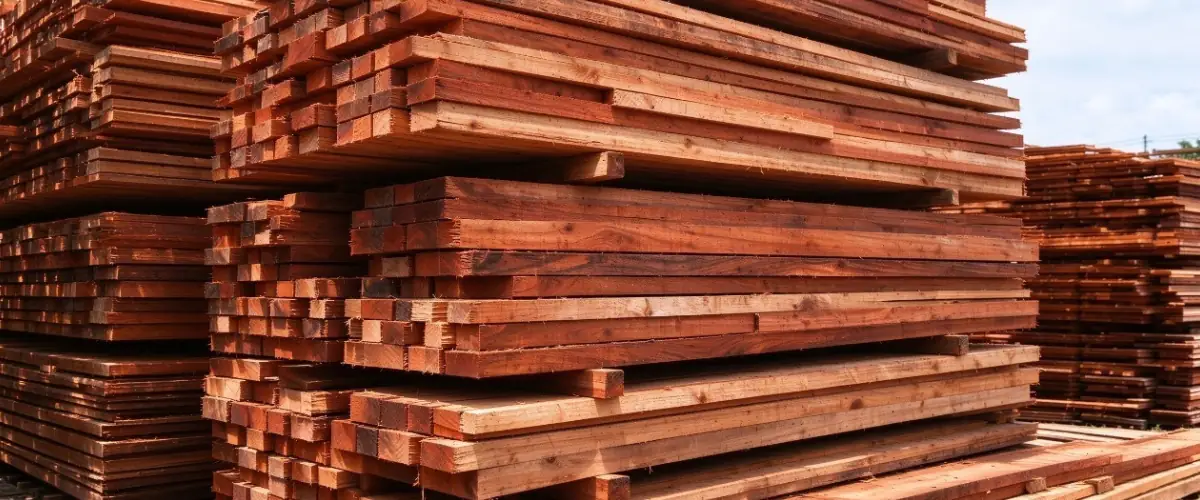
The drying method can influence the moisture condition of sawn timber.
Air-dried timber loses moisture naturally through exposure to circulating air. The process is relatively simple, but drying time depends on species, board thickness, weather, and storage conditions.
Kiln-dried timber is dried in a controlled environment where temperature, humidity, and airflow can be managed. This allows producers to control the drying process more consistently and achieve a specified moisture range.
Neither method automatically guarantees that timber will meet every buyer’s requirements. Importers should confirm the actual moisture content at the agreed inspection stage rather than relying only on the description of air-dried or kiln-dried material.
What Should Export Buyers Check Before Shipment?
Before confirming a timber order, buyers should establish clear inspection and acceptance requirements.
Consider checking these five points:
- Target moisture range: Specify the acceptable minimum and maximum moisture content in the purchase contract.
- Measurement method: Agree whether a pin-type meter, pinless meter, or reference oven-dry method will be used.
- Sampling procedure: Define how many boards will be inspected and where measurements will be taken.
- Inspection records: Request measurement results and relevant quality inspection documentation when agreed.
- Packaging and storage: Confirm that timber is properly protected from rain, ground moisture, and excessive humidity during storage and transportation.
Moisture content should also be considered together with timber dimensions. As explained in our guide to sawn timber sizes and tolerances, changes in moisture can affect actual board dimensions and dimensional consistency.
How to Specify Timber Moisture Content When Ordering
A clear purchase specification helps both buyers and suppliers understand the required product condition.
For commercial timber orders, include:
- Wood species and grade
- Board thickness, width, and length
- Target moisture content and acceptable tolerance
- Rough-sawn or planed surface requirements
- Inspection method and sampling procedure
- Packaging and shipment requirements
These details make quotations easier to compare and help reduce misunderstandings during production and delivery.
Conclusion
Timber moisture content plays an important role in the quality, stability, and processing performance of sawn timber. For international buyers, selecting the correct moisture range requires consideration of wood species, final application, local climate, and manufacturing requirements.
Rather than relying only on a kiln-dried label or a general moisture percentage, buyers should establish clear specifications and agree on an inspection method before shipment.
If you are sourcing sawn timber for furniture, construction, packaging, or woodworking, contact HuixinWood to discuss your required wood species, dimensions, grades, and moisture specifications. Clear purchasing requirements are an important step toward consistent timber quality and reliable international supply.