Plywood for cabinets is widely used in furniture manufacturing because of its strength, structural stability, and versatility. However, different cabinet components have different material requirements. Cabinet backs and cabinet carcasses serve distinct functions, so selecting the right plywood for each part is essential for ensuring durability, production efficiency, and overall furniture quality.
For cabinet manufacturers, understanding these differences helps optimize material costs without compromising structural performance. This guide explains how to select plywood for cabinet backs and carcasses and what buyers should consider when sourcing materials.
Understanding Cabinet Backs and Cabinet Carcasses
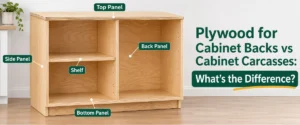
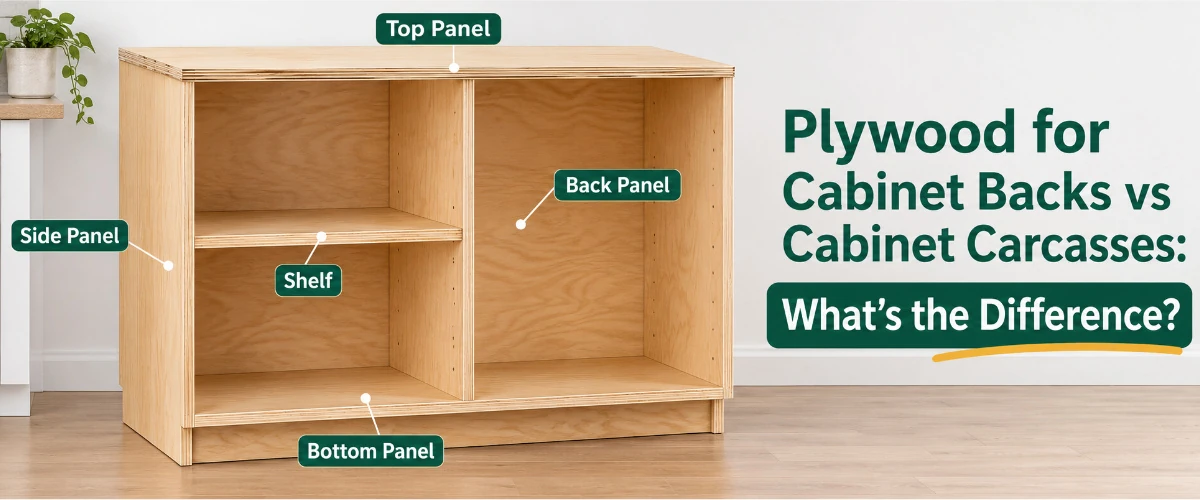
A cabinet typically consists of several structural components, including side panels, top and bottom panels, shelves, and a back panel.
The cabinet back closes the rear of the cabinet, helps maintain its overall shape, and provides additional stability when properly fixed. It is usually less exposed to direct loads than the main structural panels.
The cabinet carcass, on the other hand, forms the main cabinet structure. It includes the sides, top, bottom, and sometimes internal partitions and shelves. These components support the cabinet’s weight, stored items, doors, and hardware.
Because their functions differ, the plywood selected for these components should meet different performance requirements.
Plywood Requirements for Cabinet Backs
Choosing plywood for cabinets requires special attention to carcass components because they support the cabinet’s main structure, stored items, doors, and hardware. The selected plywood should provide sufficient strength and stability for everyday use.
Thickness and Weight Considerations
Cabinet backs commonly use thinner plywood to reduce overall furniture weight and material costs. The appropriate thickness depends on cabinet dimensions, installation methods, and the required level of rigidity.
For larger cabinets, a back panel that is too thin may bend or fail to maintain its shape during handling and installation. Manufacturers should therefore consider panel size and fixing methods rather than selecting materials based on thickness alone.
Surface Quality and Stability
Although cabinet backs are often hidden after installation, consistent panel dimensions and a flat surface are still important.
Uneven thickness, warping, or poorly bonded veneer layers can make assembly more difficult. Buyers should check panel flatness, edge condition, and bonding quality to ensure that the back panels fit correctly into the cabinet structure.
Plywood Requirements for Cabinet Carcasses
Cabinet carcasses require plywood with stronger structural performance because they support the cabinet’s main components and stored contents.
Strength and Load-Bearing Performance
Side panels, bottom panels, and shelves must withstand loads during everyday use. Plywood for these components should have suitable strength and internal bonding to resist bending, splitting, and structural failure.
The required performance depends on cabinet size, shelf span, expected loading, and construction design. Manufacturers should evaluate these factors before confirming material specifications.
Screw Holding and Core Construction
Cabinet carcasses are assembled using screws, dowels, connectors, and other hardware. Therefore, the internal core structure is an important consideration when selecting plywood.
A consistent core helps provide more reliable fastening and reduces the risk of splitting around fixing points. Buyers should inspect core gaps, veneer alignment, and edge quality, especially when panels will be cut, drilled, and assembled in large production batches.
For more information about internal structures, see our guide to different plywood core types.
Moisture Resistance and Durability
Kitchen and bathroom cabinets may be exposed to humidity, occasional water splashes, and changes in indoor temperature.
For these applications, manufacturers should consider the intended environment and select plywood with suitable bonding performance and moisture resistance. However, moisture-resistant plywood should not automatically be treated as waterproof.
The adhesive type, veneer quality, edge sealing, and finishing system all contribute to the long-term performance of cabinet components.
Can the Same Plywood Be Used for Both?
In some cabinet designs, the same plywood specification can be used for both back panels and carcass components. This may simplify purchasing, inventory management, and production planning.
However, using one specification for every component is not always the most cost-effective solution.
For example, using heavy structural plywood for every cabinet back may increase material costs without providing meaningful performance benefits. Conversely, selecting lightweight plywood for load-bearing carcass components may reduce cabinet stability and service life.
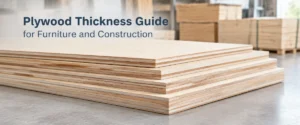
A more practical approach is to match plywood specifications to the function of each component. Manufacturers can also refer to a plywood thickness guide when establishing panel specifications for different cabinet applications.
What Should Cabinet Manufacturers Check Before Buying?
When sourcing plywood for cabinets, furniture manufacturers and importers should evaluate several factors before placing bulk orders:
- Thickness consistency: Confirm that actual panel thickness meets the agreed specifications.
- Core quality: Check for excessive gaps, overlaps, and poorly arranged veneer layers.
- Bonding performance: Ensure that the plywood has reliable adhesive bonding for its intended application.
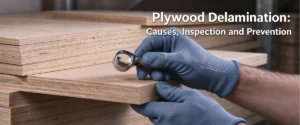
- Surface condition: Inspect for cracks, delamination, sanding defects, and other visible imperfections.
- Dimensional stability: Check panel flatness and dimensional consistency across production batches.
- Processing suitability: Confirm that the plywood can be cut, drilled, and assembled using the intended manufacturing process.
These checks help reduce production problems and maintain consistent cabinet quality.
Conclusion
Selecting plywood for cabinet backs and cabinet carcasses requires more than comparing panel thickness or purchasing the same material for every component. Back panels mainly contribute to enclosure and alignment, while carcass components require stronger structural support and reliable fastening performance.
For cabinet manufacturers, the best approach is to match plywood specifications with component functions, production requirements, and the expected service environment. Careful material selection and quality inspection can help improve manufacturing efficiency and produce more reliable finished furniture.
If you are sourcing plywood for cabinet manufacturing, contact HuixinWood to discuss your material requirements, product specifications, and bulk purchasing needs. Our team can help you find suitable plywood solutions for different furniture applications.