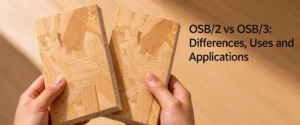
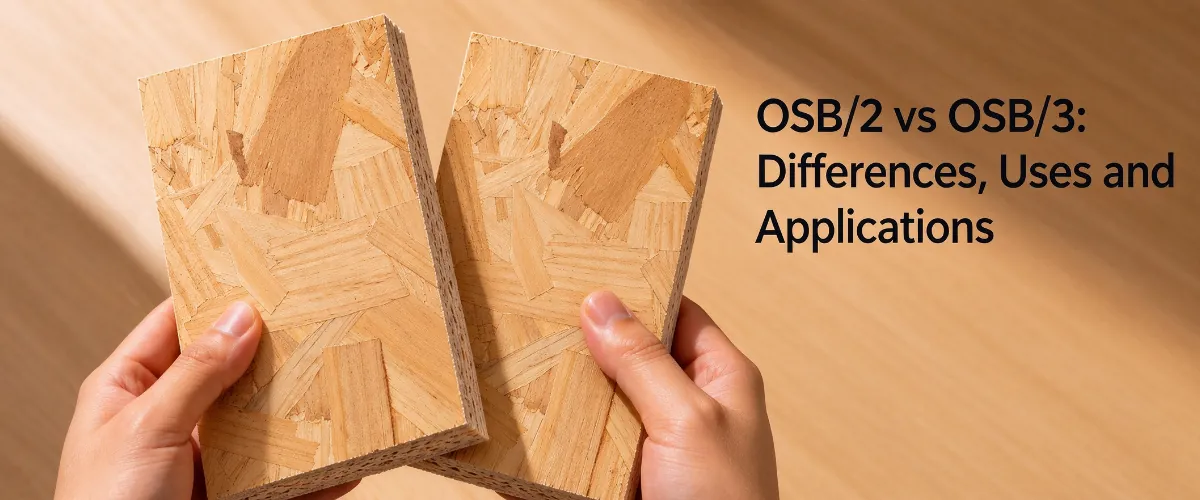
Choosing between OSB/2 vs OSB/3 is important for interior projects, furniture manufacturing and building construction. Although both grades are load-bearing oriented strand boards, they serve different purposes depending on moisture conditions and application requirements. Understanding their differences helps buyers select the right OSB grade for interior substrates, wall sheathing, roof decking and other construction projects.
When comparing OSB/2 vs OSB/3, buyers should consider where they plan to use the boards, whether the application requires structural support and how much moisture the panels may encounter. Understanding these differences helps distributors, contractors and manufacturers select suitable materials for their projects.
1. What Is the Difference Between OSB/2 and OSB/3?
OSB/2 and OSB/3 are both load-bearing oriented strand boards classified under EN 300. However, they are designed for different service conditions.
- OSB/2: Load-bearing boards for use in dry conditions.
- OSB/3: Load-bearing boards for use in humid conditions.
The main difference is their suitability for different moisture conditions. OSB/3 is designed for applications where higher humidity may occur, while OSB/2 is intended for dry interior environments.
| Comparison | OSB/2 | OSB/3 |
|---|---|---|
| Load-bearing use | Yes | Yes |
| Service conditions | Dry conditions | Humid conditions |
| Typical applications | Interior substrates and dry construction | Walls, roofs and floor sheathing |
| Moisture suitability | Limited | Better suited to humid conditions |
| Main consideration | Indoor use | Building applications |
Neither grade should be treated as completely waterproof. Proper installation, ventilation and moisture protection remain important for both products.
2. OSB/2: A Practical Choice for Interior Substrates
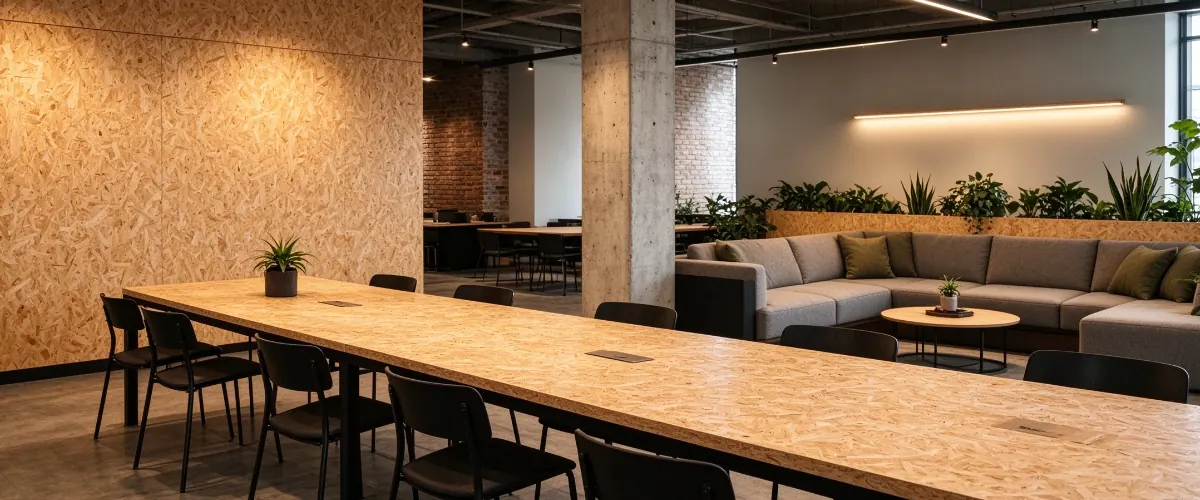
OSB/2 is commonly considered for interior projects where boards provide a stable base for finishing, furniture components or other dry-condition applications.
Its practical uses include:
Interior decoration substrates
OSB/2 can serve as a backing material for interior wall finishes, decorative panels and other dry indoor applications. Contractors can use it as a substrate before installing additional surface materials.
Cabinet and furniture bases
Furniture manufacturers may consider OSB/2 for cabinet backing, internal components and other furniture parts where the board meets the required specifications. Buyers should check thickness, surface quality and mechanical properties before selecting it.
Partition and wall substrates
In dry indoor environments, OSB/2 can provide a base for partition systems and interior wall construction. Its suitability depends on the design requirements and whether the application requires structural performance.
Packaging and general-purpose applications
OSB panels may also be used in industrial packaging, protective structures and other applications where their dimensions and mechanical properties meet project requirements. However, packaging suitability should be evaluated separately rather than assumed from the OSB/2 grade alone.
For buyers sourcing boards for interior projects, OSB/2 can be a practical option when the application does not involve humid service conditions.
3. OSB/3: Better Suited to Building and Humid Conditions
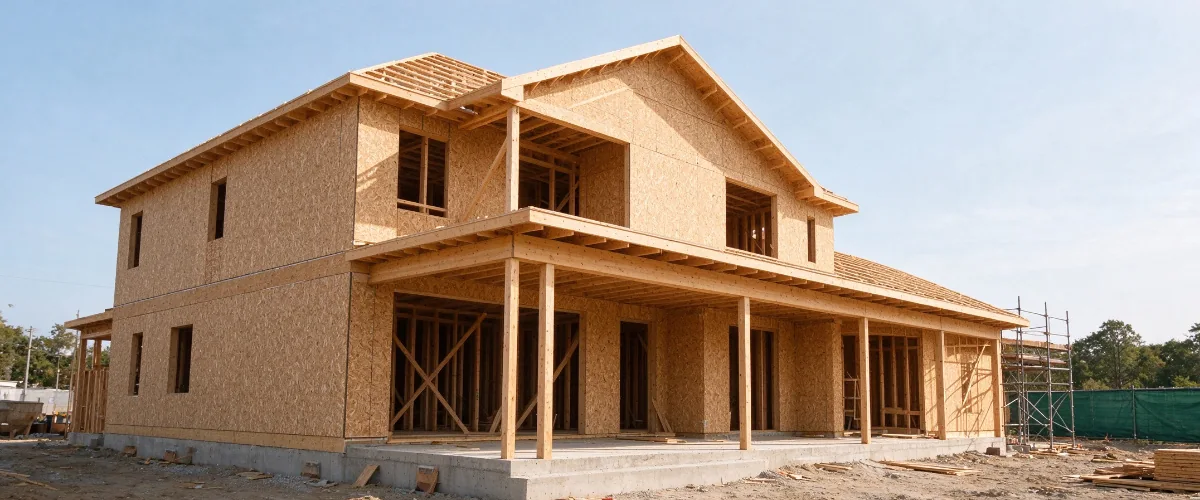
OSB/3 is a common choice in construction projects because it combines load-bearing capability with suitability for humid conditions under the EN 300 classification.
Typical applications include:
Wall sheathing
Builders use OSB/3 as sheathing in timber-frame wall systems. It provides a board layer that contributes to the wall assembly’s structural performance when properly specified and installed.
Roof sheathing
OSB/3 is widely considered for roof decking and sheathing. It provides a suitable substrate for roofing systems, provided that the installation follows the project’s structural and moisture-protection requirements.
Floor substrates
OSB/3 can serve as a subfloor or flooring substrate in building projects. Buyers should select the appropriate thickness and check span ratings, load requirements and installation specifications.
Construction projects with higher humidity
OSB/3 is suitable for certain building environments where humidity levels may fluctuate. However, it does not mean the board can withstand permanent water exposure or direct outdoor weathering without protection.
For construction buyers, OSB/3 offers greater flexibility when projects require load-bearing panels under humid service conditions.
4. OSB/2 vs OSB/3: Which Grade Should You Choose?
The right grade depends on the actual application rather than appearance alone.
Consider OSB/2 when:
- You need boards for dry interior decoration substrates.
- Your project involves cabinet components or interior partitions.
- The panels will remain in controlled indoor conditions.
- Your application does not require performance under humid service conditions.
Consider OSB/3 when:
- You need boards for wall sheathing in building projects.
- Your application involves roof or floor substrates.
- The construction environment may experience higher humidity.
- Your project requires load-bearing panels suitable for humid conditions.
Before ordering, always confirm the required thickness, panel dimensions, mechanical properties and installation conditions. Structural applications may also require project-specific engineering calculations.
5. What Should Buyers Check Before Ordering OSB?
Choosing between OSB/2 and OSB/3 is only one part of the purchasing process. Buyers should also verify the following details:
- Grade classification: Confirm whether the product is declared as OSB/2 or OSB/3 under EN 300.
- Thickness and dimensions: Match panel specifications to the intended application.
- Technical data: Review bending strength, internal bond strength, thickness swelling and other relevant performance values.
- Product documentation: Request technical data sheets, applicable test reports and Declaration of Performance where required by the destination market.
- Moisture protection: Confirm storage, transportation and installation requirements.
Working with a reliable OSB board supplier can help buyers obtain the product specifications and documentation needed for their projects.
Conclusion
When comparing OSB/2 vs OSB/3, the most important factor is the intended service environment. OSB/2 is generally suitable for dry interior substrates, furniture components and selected general-purpose applications. OSB/3 is better suited to load-bearing construction applications involving humid conditions, including wall, roof and floor sheathing.
Buyers should evaluate project requirements, technical specifications and applicable standards before placing an order. To learn more about oriented strand board properties and product options, explore our OSB board guide or contact HuixinWood for product information and sourcing support.