Plywood warping is a common quality concern for importers, wholesalers, furniture manufacturers, and construction material buyers. When plywood loses its original flat shape, it can create problems during cutting, machining, installation, and assembly. Understanding why plywood warps helps buyers evaluate panel quality and reduce material losses. This guide explains the main types of plywood deformation, their causes, practical prevention methods, and inspection procedures before accepting bulk orders.
1. What Is Plywood Warping?
Plywood warping refers to a change in the original flat shape of a panel. Instead of remaining flat, the sheet may bend, curve, or twist. These deformations can affect panel appearance, dimensional stability, and processing accuracy.
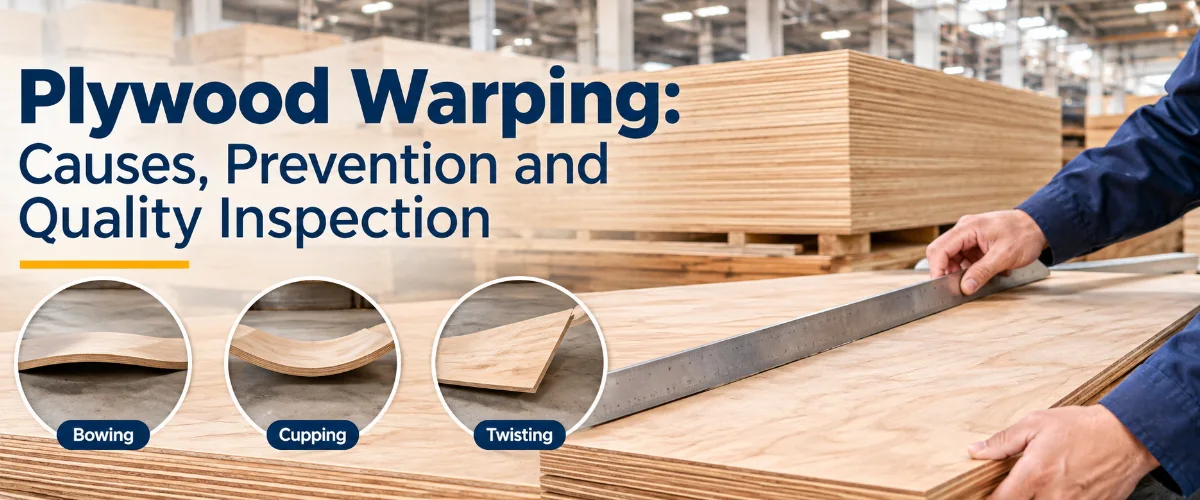
Buyers should understand three common forms of plywood warping:
- Bowing: The panel curves along its length, creating a convex or concave shape when viewed from the side.
- Cupping: The panel curves across its width, causing the two edges to rise or fall relative to the center.
- Twisting: The panel develops uneven corners, so all four corners no longer rest on the same flat plane.
These defects can appear individually or together. Identifying the deformation type helps buyers communicate quality problems more clearly and determine which inspection methods to use.
2. What Causes Plywood Warping?
Several factors can contribute to plywood warping. Moisture conditions, panel construction, manufacturing processes, and storage practices all influence the final flatness of a sheet.
Uneven Moisture Content
Wood naturally absorbs and releases moisture from its surrounding environment. When different areas of a plywood panel gain or lose moisture at different rates, they may expand or shrink unevenly.
For example, one face veneer may absorb more moisture than the opposite face. This difference can create internal stress and cause the panel to curve. Sudden changes in temperature and humidity during storage or transportation can increase this risk.
Improper Storage and Stacking
Poor stacking practices can place uneven pressure on plywood sheets. If bundles rest on irregular supports or remain partially unsupported, the panels may gradually bend under their own weight or the weight of other materials.
Storing plywood directly on damp floors or exposing it to rain can also affect panel stability. Proper support and suitable warehouse conditions help maintain flatness.
Plywood Core and Veneer Construction
Plywood consists of multiple veneer layers bonded together, usually with adjacent grain directions arranged at right angles. This cross-laminated structure helps balance dimensional movement.
However, inconsistent veneer thickness, uneven layer construction, or unsuitable core materials may create differences in stress across the panel. Poorly balanced construction can increase the possibility of deformation, especially when combined with moisture changes.
Manufacturing and Pressing Conditions
Production consistency also affects plywood flatness. Uneven adhesive application, inconsistent veneer preparation, and unsuitable hot-pressing conditions can contribute to internal stress.
After pressing, panels also need appropriate cooling and handling. Stacking or moving sheets before they reach a stable condition may affect their final shape.
3. How to Prevent Plywood Warping
Manufacturers, suppliers, and buyers can take several practical steps to reduce the risk of plywood warping.
Control moisture conditions. Manufacturers should maintain consistent veneer moisture conditions before production. Finished panels should also remain in suitable storage environments before shipment.
Use balanced stacking support. Place plywood on a level, stable surface with supports positioned to distribute the load evenly. Keep the panel edges aligned and avoid uneven pressure between bundles.
Maintain consistent production quality. Control veneer thickness, layer arrangement, adhesive application, and pressing conditions. Regular production inspections can help identify construction problems before finished panels enter storage.
Protect panels during transportation. Use suitable pallets, protective wrapping, and secure loading arrangements. Keep plywood away from direct water exposure and avoid cargo arrangements that place excessive pressure on individual bundles.
For more information about protecting panels during international shipping, see our guide to Plywood Export Packaging and Container Loading.
4. How to Inspect Plywood for Warping
A consistent inspection process helps buyers identify plywood warping before accepting samples or bulk shipments.
Visual Inspection
Place the plywood sheet in a well-lit area and examine it from different angles. Look along the panel edges and across the surface for visible curves, raised corners, or uneven sections.
Inspect several sheets from different bundles rather than relying on one sample. This approach provides a better understanding of batch consistency.
Straightedge Inspection
Place a reliable straightedge along the length and width of the panel. Check for visible gaps between the straightedge and the plywood surface.
Measure or record the largest gap using an appropriate measuring tool. Repeat the process at different positions to identify uneven deformation.
Flat Surface Inspection
Place the panel on a clean, level reference surface. Observe whether the sheet rests evenly or whether some corners lift away from the surface.
This method is particularly useful for identifying twisting. However, the supporting surface itself must be flat to avoid misleading results.
Check Against Agreed Specifications
There is no single flatness tolerance that applies to every plywood product. Acceptable limits may depend on panel dimensions, thickness, grade, intended application, and applicable product standards.
Before production, buyers should agree with suppliers on the inspection method, sampling quantity, and acceptable flatness requirements. For a broader purchasing checklist, refer to our Plywood Buying Guide.
5. What Should Buyers Check Before Accepting Plywood?
For international B2B orders, buyers should evaluate panel flatness alongside other important quality factors.
A practical inspection checklist includes:
| Quality Factor | What to Check |
|---|---|
| Flatness | Bowing, cupping, and twisting |
| Moisture | Moisture consistency across panels |
| Thickness | Nominal thickness and tolerance |
| Core construction | Veneer arrangement and visible gaps |
| Bonding | Glue lines and possible delamination |
| Surface | Sanding quality and visible defects |
| Packaging | Panel support and moisture protection |
If inspectors identify deformation, they should record the affected quantity, bundle numbers, panel dimensions, and inspection conditions. Photographs taken from the panel edges and corners can also help suppliers assess the problem.
Buyers should compare inspection results with approved samples and written purchase specifications. If bonding defects also appear, consult our guide to Plywood Delamination: Causes, Inspection and Prevention to understand the difference between panel deformation and glue-line failure.
Conclusion
Plywood warping can result from uneven moisture conditions, poor storage, inconsistent panel construction, manufacturing variations, and transportation damage. Although buyers cannot eliminate every environmental factor, proper production control, balanced stacking, and suitable packaging can reduce the risk.
For importers and furniture manufacturers, checking panel flatness before accepting bulk orders is an important part of plywood quality control. Clear specifications, consistent inspection methods, and effective communication with suppliers help reduce quality disputes and support reliable purchasing decisions.
HuixinWood supplies plywood products for furniture, construction, and other commercial applications. Contact HuixinWood to discuss your plywood specifications, quality requirements, and export orders.