Introduction
An H20 timber beam is one of the most widely used structural components in modern concrete formwork systems. Known for its high strength, lightweight construction, and long service life, this engineered wooden beam has become a preferred solution for contractors, builders, and formwork manufacturers worldwide.
Whether you’re constructing residential buildings, bridges, tunnels, or high-rise structures, choosing the right H20 timber beam can significantly improve construction efficiency while reducing overall project costs.
This guide explains everything you need to know about H20 timber beams—from their structure and manufacturing process to specifications, advantages, applications, and buying tips.
What Is an H20 Timber Beam?
An H20 timber beam is an engineered wooden beam designed specifically for supporting concrete formwork during construction.
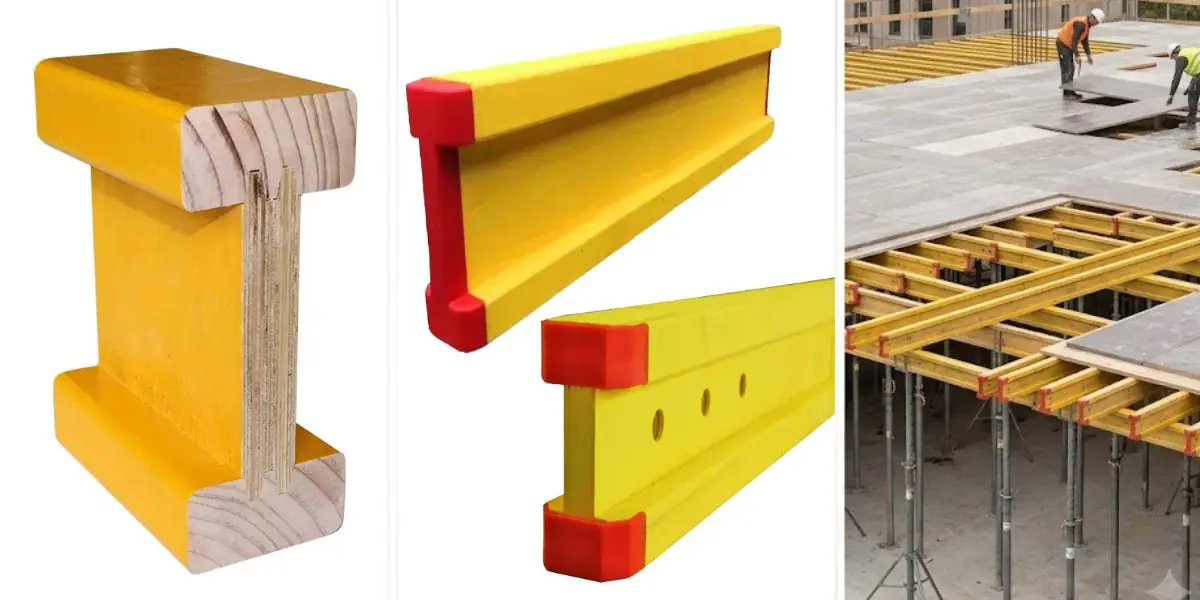
The beam features an I-shaped cross-section, consisting of:
- Solid wood or LVL flanges
- High-density plywood or OSB web
- Waterproof adhesive bonding
- Protective waterproof coating on the surface
The “H20” designation refers to the beam height of approximately 200 mm, which has become the international standard for formwork beams.
Because of their excellent load-bearing capacity and lightweight design, H20 beams are extensively used in slab formwork, wall formwork, and bridge construction.
H20 Timber Beam Structure
An H20 beam consists of three major components:
Top Flange
The upper flange bears compression loads and is usually manufactured from:
- Spruce
- Pine
- LVL
- Finger-jointed solid timber
Web
The central web provides shear strength and dimensional stability.
Common materials include:
- Waterproof plywood
- Multi-layer plywood
- High-density OSB
Bottom Flange
The bottom flange withstands tensile forces and helps maintain structural rigidity.
All components are bonded with waterproof phenolic adhesives for enhanced durability.
How H20 Timber Beams Are Manufactured
The production process typically includes:
Step 1
Selection of kiln-dried timber.
Step 2
Finger-jointing and strength grading.
Step 3
Manufacturing plywood or OSB web panels.
Step 4
Precision assembly using waterproof glue.
Step 5
High-pressure pressing.
Step 6
Edge sealing and waterproof painting.
Step 7
Quality inspection and load testing.
Modern factories use automated production lines to ensure consistent dimensions and reliable performance.
H20 Timber Beam Specifications
| Specification | Standard |
|---|---|
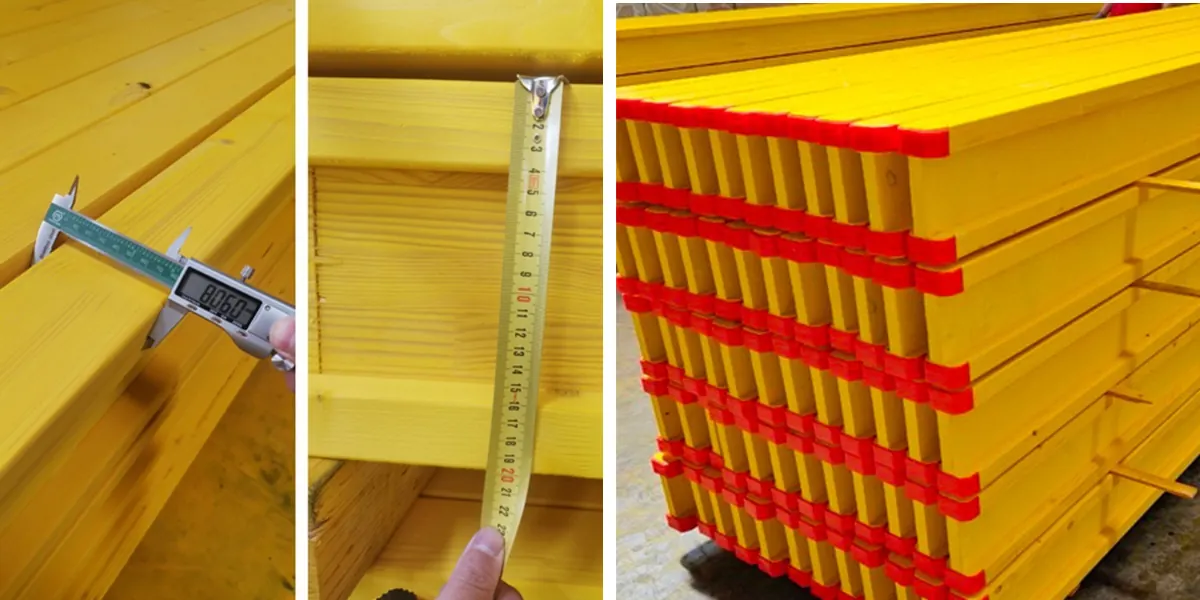
| Height | 200 mm |
| Width | 80 mm |
| Flange Thickness | 40 mm |
| Length | 1.8–6.0 m (Custom Available) |
| Web Material | Waterproof Plywood / OSB |
| Flange Material | Spruce / Pine / LVL |
| Glue | Waterproof Phenolic |
| Surface | Yellow Waterproof Coating |
| Moisture Content | 8–12% |
| Reuse Times | 50–100+ Uses (Proper Maintenance) |
Advantages of H20 Timber Beams
High Strength-to-Weight Ratio
Compared with steel beams, H20 timber beams offer excellent load capacity while remaining lightweight, making them easier to transport and install.
Easy Handling
Workers can manually move and assemble beams without heavy lifting equipment, reducing labor costs.
Excellent Load Capacity
Engineered construction ensures reliable performance under heavy concrete loads while maintaining dimensional stability.
Cost Effective
Although the initial investment may be slightly higher than ordinary timber, H20 beams provide significantly more reuse cycles, lowering long-term costs.
Moisture Resistance
The waterproof coating protects against moisture penetration, extending service life in demanding construction environments.
Sustainable Material
Most manufacturers use responsibly sourced timber certified by FSC or PEFC, making H20 beams an environmentally friendly construction material.
Common Applications
H20 timber beams are widely used in:
- Concrete slab formwork
- Wall formwork
- Column formwork
- Bridge construction
- Tunnel engineering
- High-rise buildings
- Industrial plants
- Infrastructure projects
Their versatility makes them suitable for nearly every type of concrete construction.
H20 Timber Beam vs Steel Beam
| Feature | H20 Timber Beam | Steel Beam |
|---|---|---|
| Weight | Lightweight | Heavy |
| Installation | Easy | Requires Machinery |
| Corrosion | No Rust | May Rust |
| Cost | Lower Overall | Higher |
| Reusability | High | Very High |
| Transportation | Easy | Difficult |
| Handling | Manual | Crane Required |
For most concrete formwork systems, H20 timber beams offer a better balance between cost, efficiency, and ease of use.
How to Choose the Right H20 Timber Beam
Before purchasing, consider the following factors:
Beam Length
Select beam lengths according to project dimensions to minimize cutting and waste.
Material Quality
Choose beams manufactured with high-quality spruce, pine, or LVL flanges.
Waterproof Coating
A durable waterproof coating significantly extends service life.
Certification
Look for suppliers offering:
- FSC Certification
- CE Certification
- ISO Quality Management
Manufacturing Experience
Reliable manufacturers maintain consistent production quality and strict testing standards.
Maintenance Tips
Proper maintenance can greatly increase the lifespan of H20 timber beams.
Recommended practices include:
- Clean concrete residue after each use.
- Avoid prolonged exposure to standing water.
- Store beams horizontally in a dry, ventilated area.
- Repair damaged end caps promptly.
- Repaint worn protective coatings when necessary.
- Inspect beams regularly before reuse.
With appropriate care, many beams can be reused more than 100 times.
Why Choose Huixinwood H20 Timber Beams?
Huixinwood supplies premium H20 timber beams designed for demanding concrete formwork applications.
Our advantages include:
- Stable dimensions
- High load capacity
- Waterproof coating
- Custom lengths available
- Strict quality inspection
- Competitive factory pricing
- OEM & ODM support
- Global export experience
Whether you require standard beams or customized specifications, we provide reliable solutions for construction projects worldwide.
Frequently Asked Questions
What does H20 mean?
H20 refers to the standard beam height of 200 mm, which is widely used in concrete formwork systems.
How long do H20 timber beams last?
With proper handling and maintenance, high-quality H20 timber beams can typically be reused 50–100+ times, depending on project conditions.
Are H20 timber beams waterproof?
They are not fully waterproof but feature a waterproof protective coating and waterproof adhesive to resist moisture during construction.
What lengths are available?
Standard lengths generally range from 1.8 m to 6.0 m, with custom sizes available from many manufacturers.
Can H20 beams replace steel beams?
For most concrete formwork applications, H20 timber beams provide sufficient strength while offering easier handling and lower transportation costs.
Conclusion
H20 timber beams have become an essential component of modern concrete formwork systems due to their outstanding strength, lightweight design, durability, and cost efficiency. Their engineered construction allows contractors to improve productivity while reducing labor and transportation expenses.
By selecting high-quality H20 timber beams from a reliable manufacturer and following proper maintenance practices, construction companies can maximize reuse cycles and achieve better long-term project value.