Plywood delamination is a common quality concern for importers, wholesalers, furniture manufacturers, and construction material buyers. It occurs when two or more veneer layers separate because the adhesive bond between them is insufficient or has deteriorated. This defect can reduce panel strength, affect dimensional stability, and shorten product service life.
Understanding the causes of plywood delamination helps buyers identify bonding defects before accepting bulk shipments. This guide explains the common signs, manufacturing factors, inspection methods, and preventive measures that can help maintain consistent plywood quality.
What Is Plywood Delamination?
Plywood is manufactured by bonding multiple thin wood veneer layers together, usually with adjacent grain directions arranged at right angles. Adhesive and controlled pressing conditions create a bonded panel with improved strength and stability.
Delamination occurs when the bond between veneer layers fails, allowing the layers to separate. It may appear during manufacturing, transportation, storage, or actual use.
Unlike surface scratches or veneer discoloration, delamination affects the internal structure of the panel. Therefore, a plywood sheet may look acceptable on the surface while still containing bonding defects inside.
Common Signs of Plywood Delamination
Buyers should understand the visible signs of delamination when inspecting plywood samples or finished shipments.
1. Separation Along Glue Lines
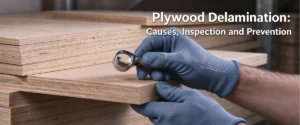
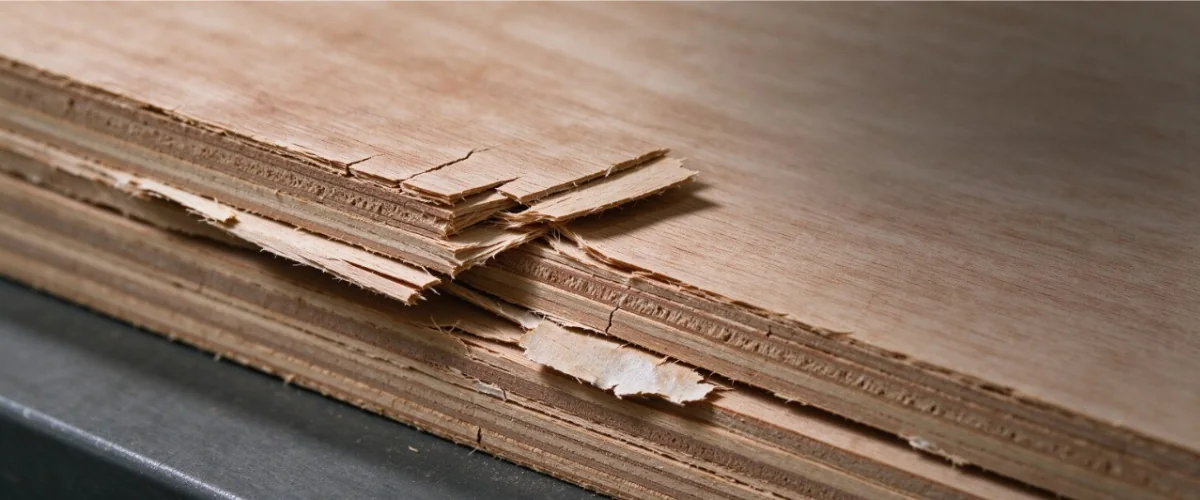
One of the clearest signs is visible separation between adjacent veneer layers along the panel edge. Small gaps or openings may indicate inadequate bonding.
2. Blisters and Hollow Areas
Raised areas or bubbles on the panel surface can indicate separation beneath the face veneer. These defects may become more noticeable when pressure or moisture affects the panel.
3. Lifting at Panel Edges
Veneer layers that begin lifting or peeling away from the panel edge may indicate bonding problems. Damaged edges should be examined carefully to determine whether the issue is physical impact or internal bond failure.
Not every surface bubble or edge defect automatically confirms delamination. Further inspection may be necessary to identify the actual cause.
What Causes Plywood Delamination?
Several manufacturing and environmental factors can contribute to plywood bonding failure.
1. Poor Adhesive Application
Insufficient adhesive coverage, uneven glue spreading, or an unsuitable adhesive system can create weak bonding areas. If the adhesive does not match the intended application and moisture exposure, the panel may experience premature bond failure.
2. Incorrect Hot Pressing Conditions
Hot pressing plays an important role in plywood production. Temperature, pressure, and pressing time must be properly controlled according to panel thickness, veneer characteristics, and adhesive requirements.
Insufficient temperature or pressing time may prevent the adhesive from curing properly. Inconsistent pressure can also result in uneven bonding across the panel.
3. Excessive Veneer Moisture Content
Veneer moisture content affects adhesive performance and pressing conditions. Excessive moisture may interfere with adhesive curing and contribute to weak bonding.
Manufacturers should maintain suitable moisture levels before gluing and pressing to achieve consistent bonding quality.
4. Improper Storage and Moisture Exposure
After production, prolonged exposure to moisture, water ingress, and repeated wet-dry cycles may contribute to bonding deterioration, particularly when panels are not designed for the relevant service conditions.
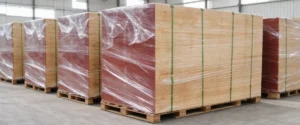
Proper packaging, dry storage, and suitable transportation conditions help reduce these risks.
How to Inspect Plywood for Delamination
A practical inspection process helps buyers identify potential defects before approving samples or accepting bulk orders.
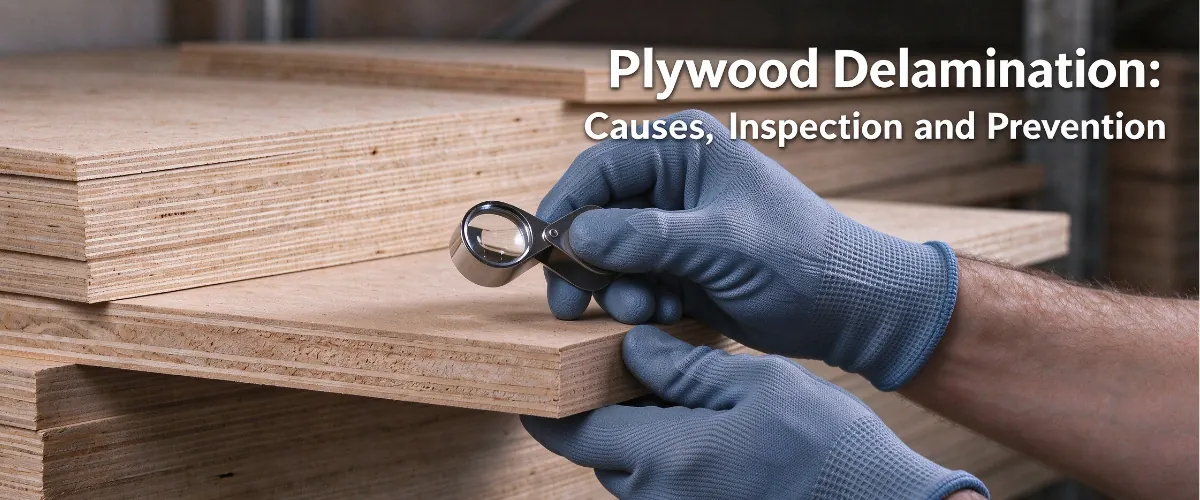
1. Conduct Visual Inspection
Examine the panel edges and surfaces under adequate lighting. Look for separated veneer layers, open glue lines, unusual blisters, and lifting edges.
Check multiple panels rather than relying on a single sample, especially when purchasing large quantities.
2. Perform Preliminary Tapping Checks
Lightly tapping the panel surface may help identify unusual hollow-sounding areas. However, sound differences are only preliminary indicators and cannot confirm internal bonding strength.
3. Arrange Sampling and Bond Quality Testing
For bulk orders, buyers should agree on a sampling plan and relevant bonding requirements before production or shipment.
Representative samples can be selected from different bundles or production batches. Where required, bond quality should be evaluated using an applicable standardized test method, such as EN 314-1 or another specification agreed upon by the buyer and supplier.
Testing should follow the relevant standard, including specimen preparation and conditioning requirements. Visual inspection alone cannot replace formal bond quality testing.
For additional purchasing checks covering glue type, core construction, thickness, and overall panel quality, buyers can also refer to our Plywood Buying Guide.
How to Prevent Plywood Delamination
Preventing delamination requires consistent quality control throughout manufacturing, storage, and transportation.
- Control adhesive application: Select a suitable adhesive system and maintain consistent glue coverage.
- Optimize pressing conditions: Adjust temperature, pressure, and pressing time according to the production specifications.
- Manage veneer moisture: Check veneer moisture content before gluing and maintain consistent production conditions.
- Protect finished panels: Store plywood in dry, well-ventilated areas and protect it from direct water exposure.
- Inspect before shipment: Check representative panels and verify that finished products meet the agreed quality requirements.
For construction applications, Film Faced Plywood should also be evaluated for both internal bonding quality and surface film adhesion. These are separate quality considerations and should be inspected independently.
What Should Buyers Record When Finding Delamination?
If delamination is discovered during inspection or after delivery, clear documentation helps suppliers investigate the problem and determine appropriate corrective actions.
Buyers should record:
- Product information: Product type, thickness, dimensions, grade, and purchase order number.
- Batch details: Production date, bundle number, and shipment identification.
- Defect location: Whether separation appears along panel edges, internal glue lines, or beneath the surface.
- Affected quantity: Number of defective panels and the estimated proportion of the inspected batch.
- Photographic evidence: Clear images of the entire panel, affected areas, panel edges, and packaging.
- Inspection details: Sampling method, inspection date, test results, and relevant environmental conditions.
Buyers should preserve representative defective samples where possible and notify the supplier promptly. Comparing the findings with approved samples and agreed specifications can help establish the cause and support a practical resolution.
Conclusion
Plywood delamination is an important quality issue that buyers should evaluate before accepting bulk orders. Poor adhesive application, unsuitable pressing conditions, excessive veneer moisture, and improper storage can all contribute to bonding failure.
A combination of visual inspection, representative sampling, and appropriate bond quality testing provides a more reliable approach to identifying defects.
HuixinWood supplies plywood products for furniture, construction, and other commercial applications. Whether you are sourcing commercial plywood or film faced plywood, our team can help you review product specifications, discuss bonding requirements, and identify suitable panel options.
Contact HuixinWood to request product specifications, discuss your purchasing requirements, and receive professional support for your next plywood order.