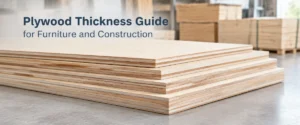
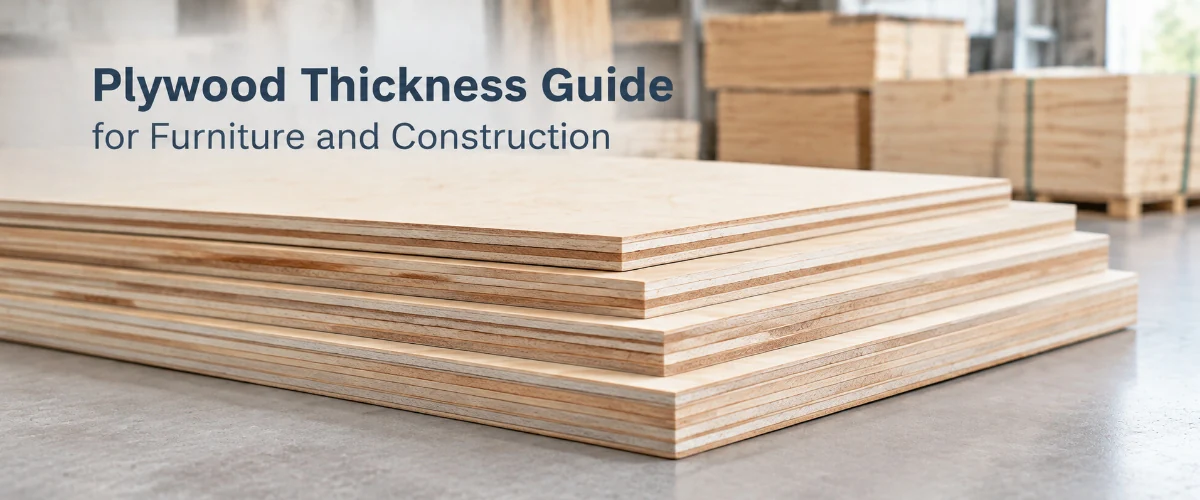
Choosing the right panel thickness is essential for furniture manufacturing, interior projects, and construction applications. This plywood thickness guide explains how to select suitable panels based on application, support conditions, load requirements, and project specifications. For importers, wholesalers, and manufacturers, understanding these factors can help reduce material waste and avoid unsuitable orders.
Plywood is available in various thicknesses, from thin decorative panels to thicker structural products. The best choice depends on the intended use rather than thickness alone.
How to Choose the Right Plywood Thickness
Before ordering, consider the following factors:
- Application: Identify whether the panel is intended for cabinet backs, shelves, tabletops, or concrete formwork.
- Load requirements: Evaluate the expected weight and bending resistance.
- Support spacing: Wider unsupported spans require careful assessment of thickness and stiffness.
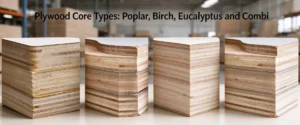
- Panel construction: Core materials, veneer quality, and bonding performance affect panel properties.
- Processing requirements: Cutting, drilling, and installation methods can influence specifications.
For more information about grades, core construction, and surface quality, see our Plywood Buying Guide.
Plywood Thickness Guide for Furniture Applications
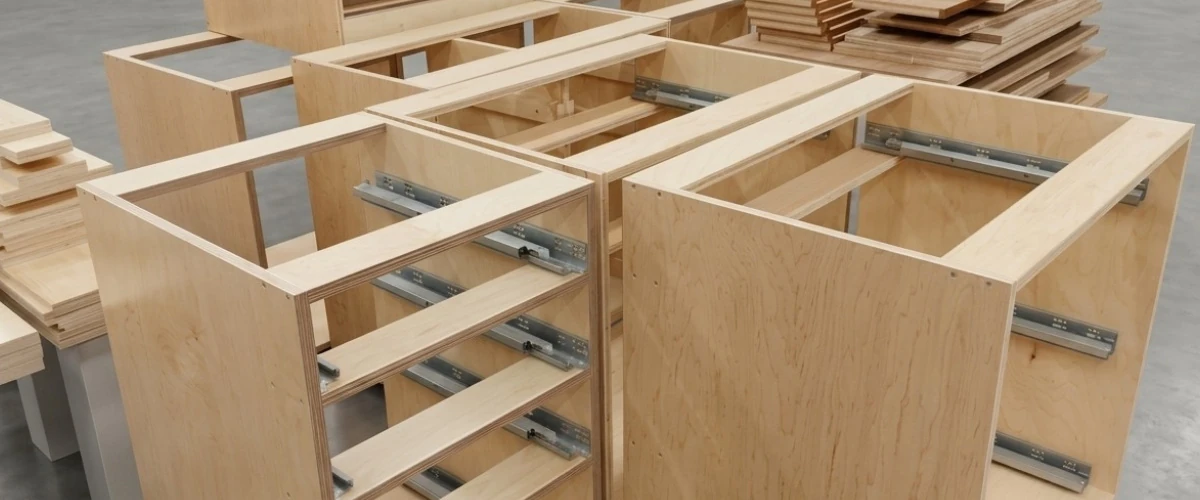
Furniture manufacturers should select thickness according to each component’s function. Cabinet backs, shelves, and tabletops have different requirements.
The following table provides general starting points for specification discussions, not universal design recommendations.
| Common Thickness | Potential Applications |
|---|---|
| 3–6 mm | Cabinet backs and lightweight panels |
| 9–12 mm | Drawer components and cabinet partitions |
| 15 mm | Furniture sides and selected shelving |
| 18 mm | Cabinet carcasses and tabletops |
| 21 mm or thicker | Selected heavy-duty furniture components |
Actual suitability depends on panel grade, dimensions, core construction, load, support spacing, and fastening methods. Long shelves carrying heavy objects may require thicker panels, closer supports, or reinforcement.
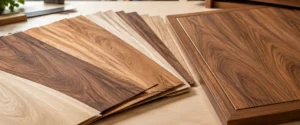
For decorative furniture, buyers should also confirm face veneer, finish, and machining requirements. Explore our Fancy Plywood for Furniture page for decorative panel options.
Plywood Thickness Guide for Construction Projects
Construction panels must meet the requirements of their intended application, support arrangement, environmental exposure, and project specifications.
For concrete formwork, thickness selection depends on formwork design, support spacing, concrete pressure, fastening methods, and reuse requirements. Thickness alone cannot establish whether a panel is suitable.
Film faced plywood is commonly used for concrete formwork because its coated surface can help produce a smooth finish and improve resistance to moisture and wear. Read our Film Faced Plywood Buying Guide for further selection considerations.
For structural or load-bearing applications, buyers should follow the project design, applicable standards, and verified technical data. Do not select panels solely from a general thickness table.
Nominal Thickness vs. Actual Thickness
Nominal thickness is the declared specification used for ordering, while actual thickness is the measured dimension of the manufactured panel. The two values may differ depending on the product and applicable manufacturing tolerances.
Before placing an order, confirm:
- Required nominal thickness and permitted tolerance.
- Applicable product standards or agreed specifications.
- Measurement methods for finished panels.
- Inspection procedures and acceptance criteria.
Thickness consistency matters when panels must fit precise furniture components or pass through automated cutting and assembly processes. Buyers should agree on measurement and acceptance requirements before bulk production.
Plywood Thickness and Panel Span
Thickness should be evaluated alongside unsupported span and expected loading. For furniture shelves, greater distances between supports can increase deflection even when panel thickness remains unchanged.
A thicker panel may help, but stiffness, core construction, load distribution, and shelf dimensions also influence performance. Construction panels require the same careful evaluation of support conditions and design loads.
When requesting quotations, provide panel dimensions, support spacing, expected loads, and installation details. For structural applications, obtain recommendations supported by technical documentation or qualified engineering guidance.
Plywood Thickness Checklist Before Ordering
A clear specification helps suppliers provide suitable panels and reduces misunderstandings during production and inspection.
Before confirming an order, check the following:
- Thickness and dimensions: Specify nominal thickness, length, width, and permitted tolerances.
- Application: State the intended use, such as furniture manufacturing or concrete formwork.
- Core construction: Confirm the required core material and panel structure.
- Surface requirements: Identify veneer species, surface grade, or coating.
- Performance requirements: Define relevant strength, moisture resistance, and bonding requirements.
- Quality inspection: Agree on measurement methods, acceptance criteria, and sample approval.
Providing these details allows suppliers to evaluate the complete requirement rather than recommending a product based on thickness alone.
Conclusion
The right plywood thickness depends on application, panel dimensions, support spacing, loading conditions, and required quality. Furniture manufacturers should assess each component individually, while construction buyers must verify that panel specifications meet project requirements.
For sourcing support, contact HuixinWood to discuss your required panel dimensions, thicknesses, core options, and quality specifications.