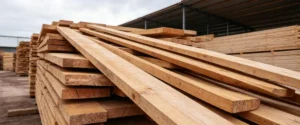
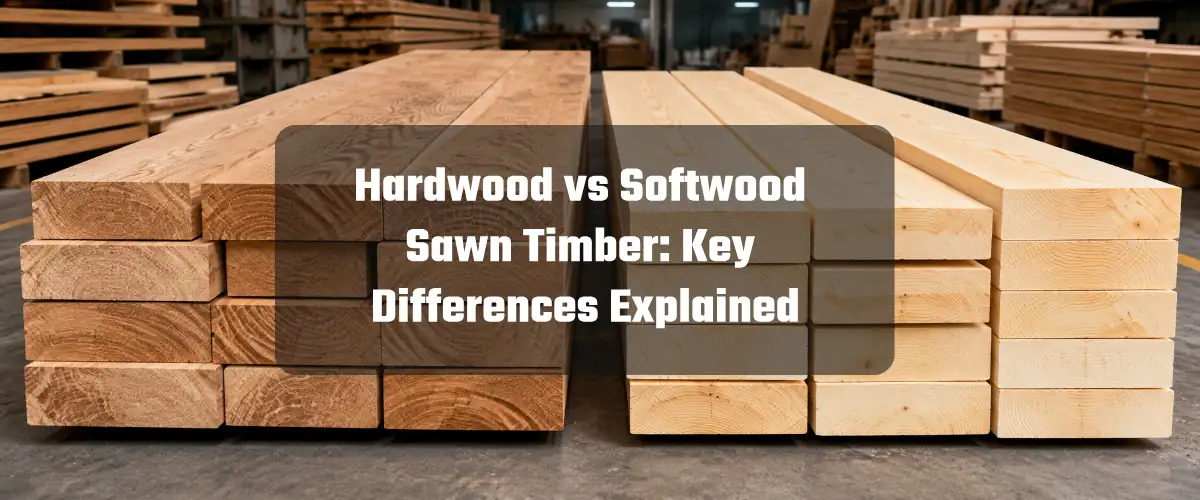
When choosing sawn timber for construction, furniture, packaging, or woodworking, understanding hardwood vs softwood sawn timber can help buyers select the right material. The two types differ in strength, density, appearance, workability, and applications. Knowing these differences makes it easier to match the timber to your project requirements and avoid paying for properties you do not actually need.
Although the names suggest that hardwood is always hard and softwood is always soft, the reality is more complex. Hardwood comes from broadleaf trees, while softwood comes mainly from coniferous trees. Some hardwoods are relatively light, and some softwoods can be surprisingly strong.
What Is Hardwood Sawn Timber?
Hardwood sawn timber is produced from broadleaf trees such as oak, beech, ash, maple, and poplar. These species are commonly used where appearance, durability, or mechanical performance is important.
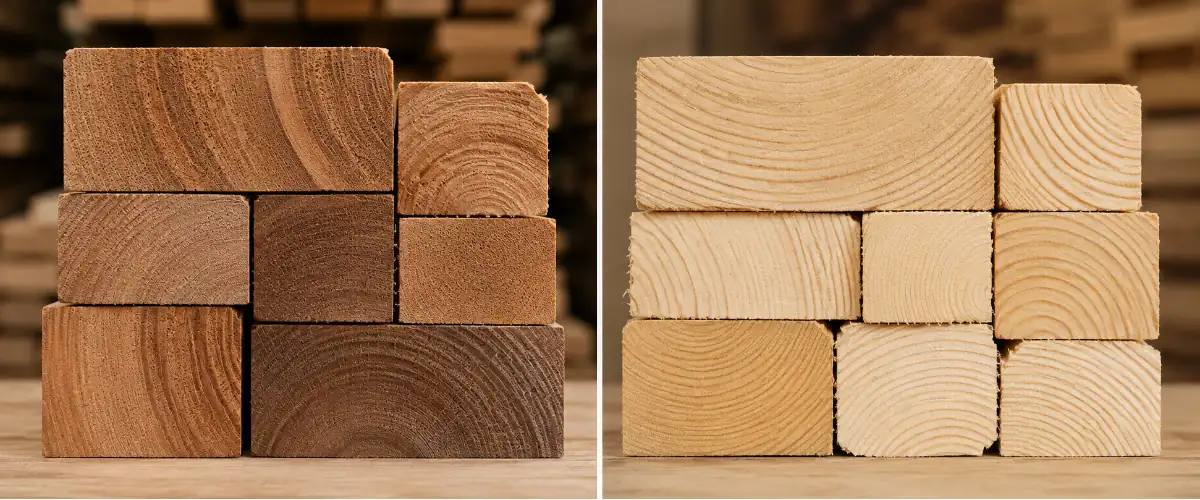
Hardwood generally has a more varied grain pattern and a wider range of natural colors. Depending on the species and grade, the surface may feature prominent grain, knots, or distinctive textures.
For commercial buyers, hardwood is often selected for products where the timber remains visible or needs to provide good structural and wear resistance.
What Is Softwood Sawn Timber?
Softwood sawn timber mainly comes from coniferous species such as pine, spruce, fir, and cedar. It is widely used because it is generally lightweight, easy to process, and available in large commercial volumes.
Softwood usually has a more uniform grain and lighter color than many hardwood species. Pine and spruce, for example, are common choices for construction timber, packaging, furniture components, and general woodworking.
For projects requiring large quantities of cost-effective timber, softwood can be a practical option.
Hardwood vs Softwood Sawn Timber: Key Differences
The best choice depends on the actual requirements of the project. Here are the main differences buyers should consider.
1. Strength
Strength varies significantly by wood species, grade, moisture content, and grain direction. Therefore, it is not accurate to assume that every hardwood is stronger than every softwood.
Many hardwood species offer excellent hardness and load-bearing performance, making them suitable for flooring, furniture, stairs, and demanding woodworking applications.
Softwoods can also provide good structural performance. Spruce and pine, for example, are widely used for framing, beams, roof structures, and other construction applications.
For structural projects, buyers should check the specific timber grade and mechanical properties rather than choosing based only on the hardwood or softwood category.
2. Density
Density is another important difference between hardwood and softwood.
Many hardwood species have higher density, which can provide greater resistance to dents, wear, and impact. This makes dense hardwood suitable for applications such as flooring, high-quality furniture, and interior components.
Softwoods are often less dense and lighter. This can be an advantage when transportation, handling, cutting, and installation efficiency are important.
However, density varies considerably between species, so product specifications should always be checked before ordering.
3. Appearance
Appearance can strongly influence the choice between hardwood and softwood.
Hardwood often offers more distinctive grain patterns and natural color variations. Oak, ash, and beech, for example, can create a premium appearance in furniture and interior products.
Softwood usually has a lighter and simpler appearance. Pine and spruce may contain visible knots, which can either be considered a natural feature or a limitation depending on the end use.
If the timber will remain exposed, buyers should pay close attention to species, grade, color, grain, and surface quality.
4. Workability
Workability is particularly important for manufacturers and woodworking companies.
Softwood is generally easy to cut, drill, nail, and machine. Its lower density can also make it easier to handle during production.
Hardwood can require more powerful tools and careful machining, especially when the species has high density. On the other hand, many hardwoods provide excellent finishing results and can be sanded, stained, or coated to create a high-quality surface.
The right choice depends on the production process and the equipment available.
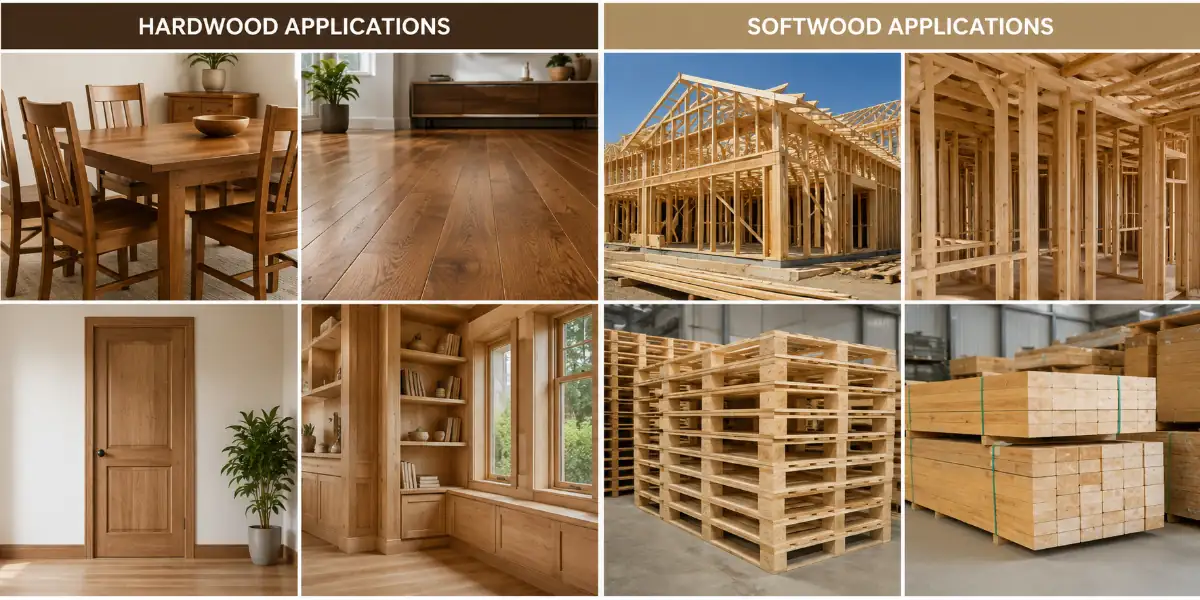
Hardwood vs Softwood: Common Applications
Both types of sawn timber have extensive commercial applications.
Hardwood sawn timber is commonly used for:
- Furniture and cabinets
- Flooring
- Doors and interior components
- Stairs and decorative woodworking
- High-end joinery
- Visible timber products
Softwood sawn timber is commonly used for:
- Construction and framing
- Roof structures
- Packaging and pallets
- Furniture components
- Crates and industrial packaging
- General woodworking
There can be overlap between these categories. The final application, timber grade, dimensions, and performance requirements should determine the purchasing decision.
Which Sawn Timber Should You Choose?
There is no universal winner in the hardwood vs softwood sawn timber comparison.
Choose hardwood when the project prioritizes a particular appearance, wear resistance, hardness, or premium finish. Choose softwood when lightweight handling, easy processing, availability, or cost efficiency is more important.
For international buyers, it is also important to confirm the wood species, grade, dimensions, moisture content, surface condition, and packing requirements before placing an order. Clear specifications help suppliers provide accurate quotations and reduce quality disputes after shipment.
Final Thoughts
The difference between hardwood and softwood is more than simply “hard” versus “soft.” Strength, density, appearance, workability, and applications can vary significantly between individual species.
For the best result, compare the actual specifications of the timber with your project’s requirements instead of selecting a material based only on its category.
If you are looking for different species and specifications for construction, furniture, packaging, or woodworking projects, explore our Wood Sawn Timber range to find a suitable option for your application.