What Is MDF Board?
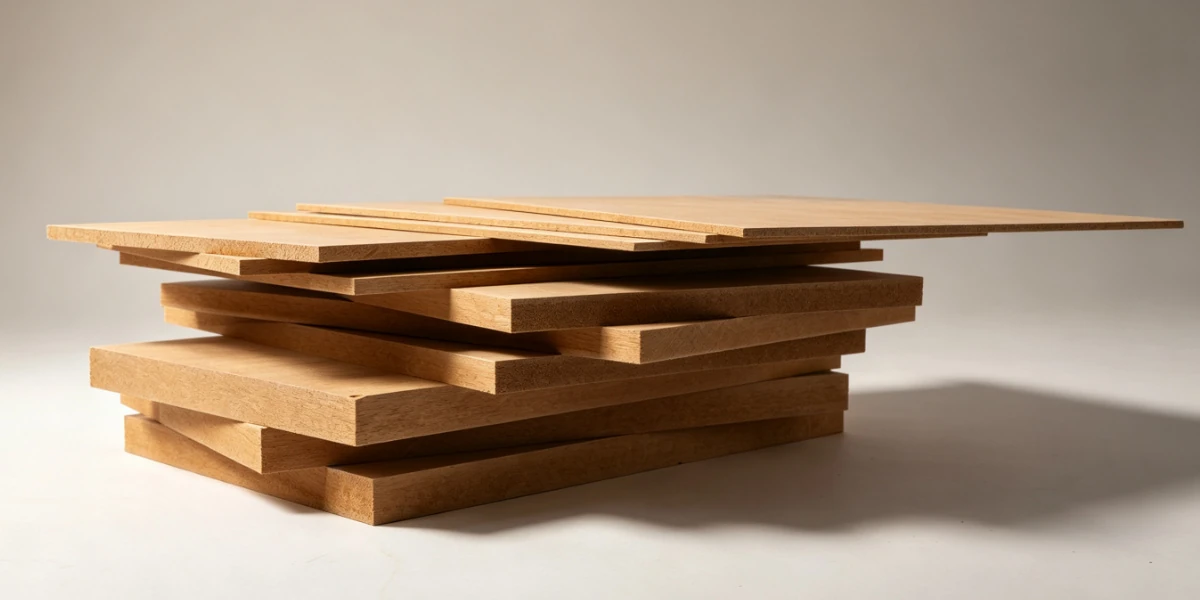
What is MDF board? MDF, short for Medium Density Fiberboard, is an engineered wood panel made from fine wood fibers bonded with resin and wax under high temperature and pressure. The result is a smooth, dense, and uniform board that is easy to cut, machine, paint, and laminate.
Unlike solid wood, MDF has no knots or natural grain, giving it a consistent surface and stable performance. Compared with particle board, it is stronger and smoother, while compared with plywood, it offers a flatter surface that is ideal for painted or laminated finishes.
Today, MDF board is widely used in furniture manufacturing, cabinets, wardrobes, wall panels, shelving, interior doors, and decorative applications. Its combination of affordability, versatility, and excellent finishing performance makes medium density fiberboard one of the most popular engineered wood products worldwide.
How Is MDF Board Manufactured?
The quality of MDF board depends largely on its manufacturing process.
- Wood Preparation
Hardwood, softwood, recycled wood, or wood chips are cleaned and processed into small pieces. - Fiber Refining
The chips are softened with steam and separated into fine wood fibers. - Drying and Resin Blending
The fibers are dried and mixed with resin, wax, and optional additives such as moisture-resistant or fire-retardant chemicals. - Hot Pressing
The treated fibers are formed into a mat and compressed under high temperature and pressure, creating a dense and stable panel. - Sanding and Inspection
Both sides are sanded to achieve a smooth finish before the boards are cut into standard sizes and inspected for quality.
This controlled process gives medium density fiberboard its uniform density, excellent machinability, and smooth surface.
MDF Board Structure
Unlike plywood, which consists of multiple veneer layers, MDF board has a homogeneous structure made of compressed wood fibers.
A standard board contains:
- Fine wood fibers
- Synthetic resin
- Wax additives
- Optional moisture- or fire-resistant additives
Because there is no grain direction or internal voids, MDF machines cleanly and provides an excellent base for paint, veneer, melamine paper, or PVC film.
Types of MDF Board
Different projects require different grades of MDF board.
Standard MDF
Designed for dry indoor environments such as furniture, shelving, and decorative panels.
Moisture Resistant MDF (MR MDF)
Contains water-repellent additives, making it suitable for kitchens, bathrooms, and other humid indoor spaces.
Fire Rated MDF (FR MDF)
Manufactured with fire-retardant chemicals for commercial buildings, schools, hospitals, and public projects.
Melamine Faced MDF
Features a decorative melamine surface that is ready to use without painting, making it ideal for wardrobes, office furniture, and cabinets.
Advantages of MDF Board
Smooth Surface
The dense fiber structure provides a flat surface that produces excellent paint and laminate finishes.
Easy to Machine
MDF can be cut, drilled, and routed accurately without significant splintering, making it ideal for furniture production and CNC machining.
Affordable
Compared with solid wood, MDF board offers a cost-effective solution while maintaining an attractive appearance.
Stable Quality
Its uniform density reduces warping and provides consistent machining results.
Versatile Applications
Medium density fiberboard can be finished with paint, veneer, laminate, or melamine, making it suitable for a wide range of interior products.
Disadvantages of MDF Board
Although MDF offers many benefits, it also has some limitations.
- Standard MDF is not suitable for prolonged water exposure.
- It is generally heavier than plywood.
- Screw holding strength is lower than solid wood.
- Fine dust is generated during cutting and sanding, so proper dust extraction is recommended.
Choosing the appropriate grade, such as Moisture Resistant MDF, helps overcome many of these limitations.
Common Applications
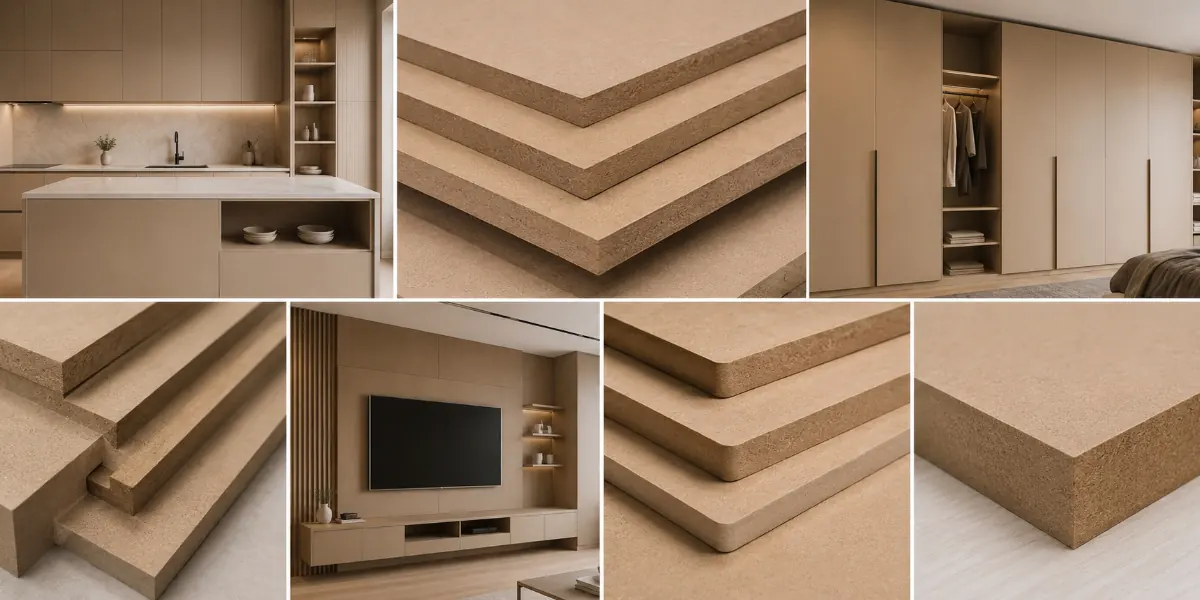
Thanks to its smooth finish and easy processing, MDF board is widely used in:
- Home and office furniture
- Kitchen cabinets
- Wardrobes
- Interior doors
- Decorative wall panels
- Shelving
- Retail display fixtures
- Exhibition stands
- Moldings and trim
- Speaker cabinets
Its versatility makes medium density fiberboard a preferred material for both residential and commercial interior projects.
Standard Sizes
| Specification | Common Options |
|---|---|
| Standard Size | 1220 × 2440 mm (4 × 8 ft) |
| Thickness | 2–30 mm |
| Density | 680–850 kg/m³ |
| Surface | Raw, Sanded, Melamine, Veneer |
| Glue Grade | E0, E1, CARB P2 |
Custom sizes and finishes are also available depending on the manufacturer and project requirements.
MDF Board vs Plywood
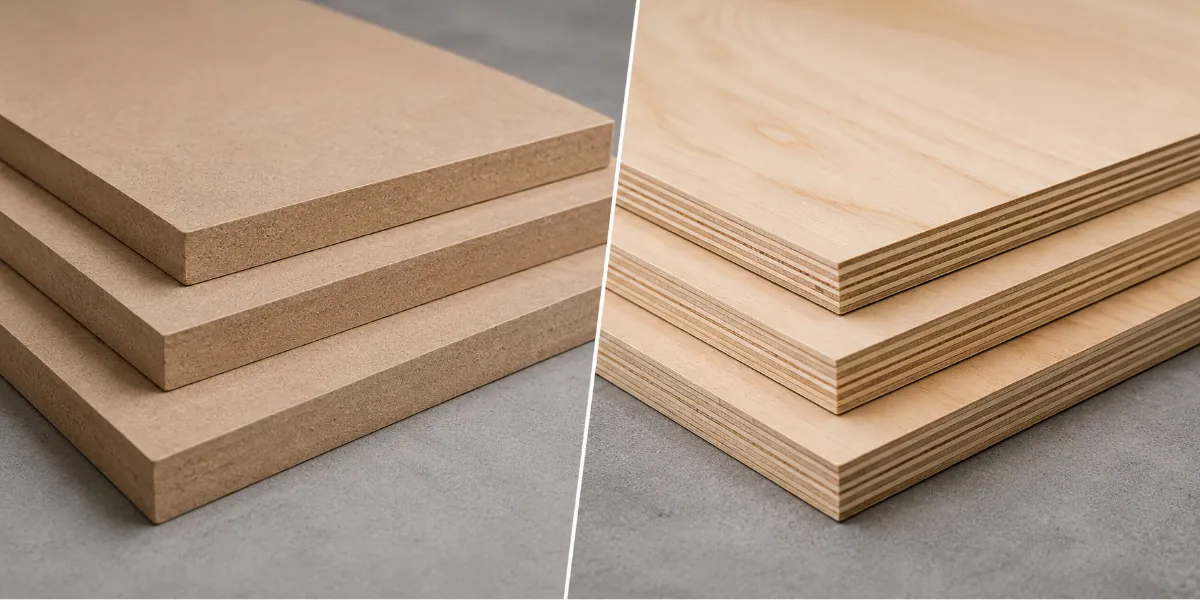
| Feature | MDF Board | Plywood |
|---|---|---|
| Surface | Very Smooth | Natural Grain |
| Paint Finish | Excellent | Good |
| Machining | Excellent | Good |
| Moisture Resistance | Moderate | Better |
| Weight | Heavier | Lighter |
| Cost | Lower | Higher |
If your project requires a smooth painted surface, MDF board is often the better choice. For structural applications or humid environments, plywood generally provides better strength and moisture resistance.
How to Choose the Right MDF Board
Before purchasing MDF board, consider the following factors:
- Choose the appropriate thickness for your application.
- Select Moisture Resistant MDF for humid environments.
- Specify Fire Rated MDF if required by building regulations.
- Check the formaldehyde emission grade, such as E0 or E1.
- Purchase from an experienced manufacturer with reliable quality control and certifications.
Choosing the right medium density fiberboard ensures better performance and a longer service life.
Frequently Asked Questions
What is MDF board made of?
MDF board is made from fine wood fibers bonded with resin and wax under heat and pressure.
Is MDF better than plywood?
MDF provides a smoother surface and is easier to paint, while plywood offers higher strength and better moisture resistance.
Is MDF waterproof?
No. Standard MDF is not waterproof. Moisture Resistant MDF performs better in humid indoor environments but should not be submerged in water.
Is MDF board good for furniture?
Yes. MDF board is widely used for cabinets, wardrobes, shelving, desks, and other indoor furniture because it offers a smooth surface, stable quality, and excellent finishing performance.
Conclusion
So, what is MDF board? It is a versatile and cost-effective engineered wood product manufactured from compressed wood fibers. Thanks to its smooth surface, consistent density, and excellent machinability, medium density fiberboard is widely used in furniture, cabinetry, decorative panels, and interior construction.
By understanding its manufacturing process, available grades, advantages, and limitations, buyers can choose the right MDF board for different applications. Whether you are a furniture manufacturer, importer, distributor, or contractor, selecting high-quality MDF from a reliable supplier will help ensure consistent performance and long-lasting results.
If you are looking for a trusted MDF board manufacturer and supplier, we offer a wide range of standard and customized MDF products in various sizes, thicknesses, and grades to meet your project requirements. Contact us today to request a quotation, product specifications, or free samples. Our experienced team is ready to help you find the right MDF solution for your business.