Introduction
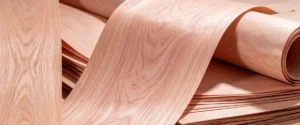
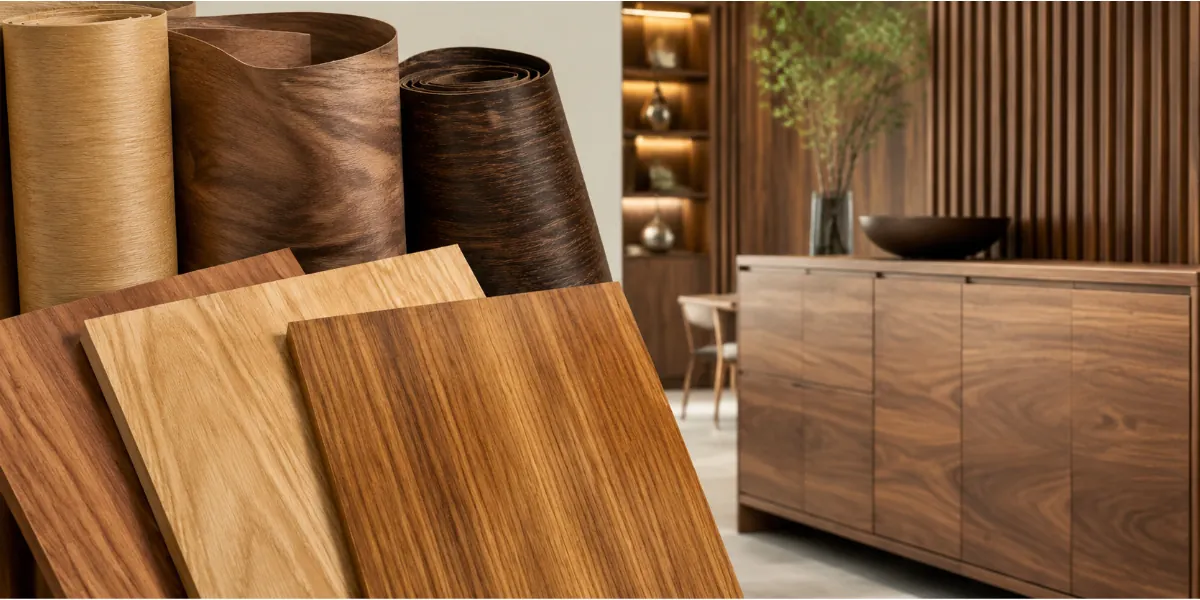
Wood veneer is a thin layer of natural timber cut from logs and applied to furniture, plywood, doors, cabinets, and interior surfaces to create the appearance of real wood while improving material efficiency and design flexibility.
Unlike solid wood, which is made entirely from natural timber, this material uses a thin slice of wood attached to a stable core material such as plywood, MDF, or particle board.
Today, wood veneer is mainly divided into two categories: natural veneer and engineered veneer. Understanding the differences between these two types can help manufacturers, designers, and buyers choose the right veneer solution for their projects.
What Is Wood Veneer?
This product is a thin sheet of real wood, usually ranging from 0.2mm to 3mm in thickness, produced by slicing or peeling logs into continuous sheets or decorative pieces.
The veneer retains the natural characteristics of wood, including:
- Wood grain patterns
- Natural colors
- Texture and appearance
- Unique growth marks
Wood veneer is commonly bonded onto substrates such as:
- Plywood
- MDF
- Particle board
- Solid wood panels
This process creates decorative panels that have the appearance of solid wood while requiring less raw timber.
Because of its combination of beauty, stability, and cost efficiency, wood veneer is widely used in:
- Furniture manufacturing
- Kitchen cabinets
- Interior doors
- Wall panels
- Flooring
- Architectural decoration
- Luxury interior projects
How Are Veneer Sheets Manufactured?
The manufacturing process usually includes several important steps:
1. Log Selection
High-quality veneer production starts with carefully selected logs. Different wood species provide different colors, grain patterns, and textures.
Common veneer species include:
- Oak veneer
- Walnut veneer
- Teak veneer
- Ash veneer
- Maple veneer
- Birch veneer
- Okoume veneer
2. Veneer Cutting
Logs are processed using different cutting methods:
Rotary Cut Veneer
Rotary cutting removes veneer by rotating the log against a blade. This method produces large sheets with a natural wave-like grain pattern.
Advantages:
- Higher yield
- Cost-effective
- Suitable for plywood production
Sliced Veneer
Sliced veneer cuts the log into thin layers following the natural grain direction.
Advantages:
- Premium appearance
- More attractive grain patterns
- Commonly used for high-end furniture
3. Drying and Grading
After cutting, veneer sheets are dried to control moisture content and improve stability.
Manufacturers then grade veneer according to:
- Appearance
- Grain consistency
- Color
- Defects
- Thickness
Types of Veneer Products
These products are mainly classified into two categories:
- Natural Veneer
- Engineered Veneer
Each type has different characteristics, production methods, and applications.
What Is Natural Veneer?
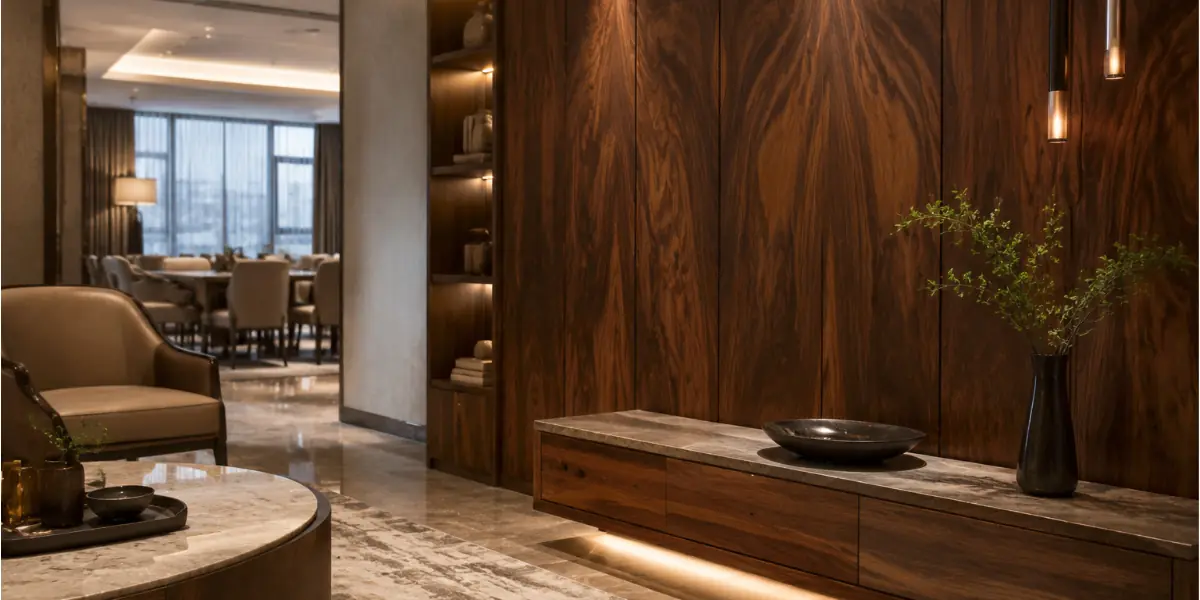
Natural veneer is made directly from real wood logs without changing the natural grain structure.
Each sheet of natural veneer has unique characteristics because no two trees are exactly the same.
Features of Natural Veneer
1. Authentic Wood Appearance
Natural veneer maintains the original beauty of timber, including:
- Unique grain patterns
- Natural color variations
- Real wood texture
This makes it popular for premium furniture and luxury interior designs.
2. Unique Patterns
Since natural veneer comes directly from trees, each veneer sheet has its own appearance.
Common natural veneer patterns include:
- Straight grain
- Cathedral grain
- Quarter cut grain
- Flat cut grain
3. Premium Applications
Natural veneer is widely used for:
- High-end furniture
- Hotel interiors
- Office decoration
- Luxury cabinets
- Architectural panels
What Is Engineered Veneer?
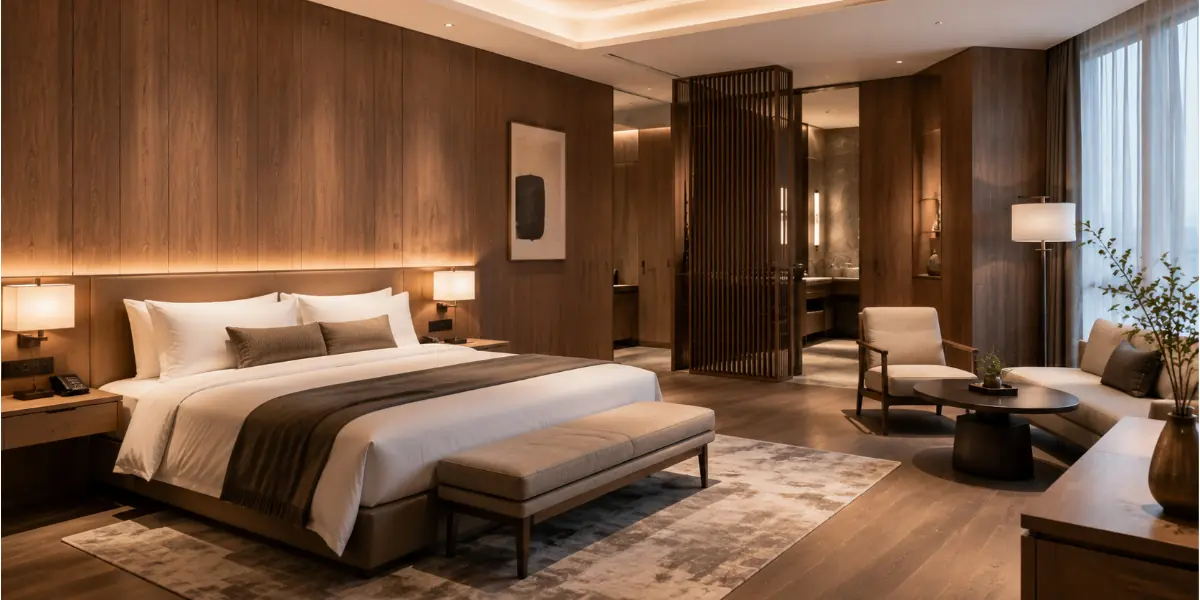
Engineered veneer, also known as reconstituted veneer or recon veneer, is a manufactured veneer product created by processing natural wood fibers and recreating controlled grain patterns.
Unlike natural veneer, engineered veneer allows manufacturers to achieve consistent colors and designs.
How Is Engineered Veneer Made?
The production process usually includes:
- Selecting natural wood species
- Cutting wood into thin layers
- Dyeing veneer sheets
- Arranging layers into specific grain patterns
- Pressing and slicing into veneer sheets
This process creates uniform veneer with predictable appearance.
Features of Engineered Veneer
1. Consistent Appearance
Engineered veneer provides:
- Uniform colors
- Repeated grain patterns
- Stable quality
This makes it suitable for large furniture production.
2. More Design Options
Manufacturers can create different styles by controlling:
- Wood colors
- Grain directions
- Patterns
- Textures
3. Environmentally Efficient
Engineered veneer improves wood utilization because it can maximize the use of natural wood resources.
Natural Veneer vs Engineered Veneer: Key Differences
| Feature | Natural Veneer | Engineered Veneer |
|---|---|---|
| Material | Real wood sliced from logs | Reconstructed wood veneer |
| Appearance | Unique natural grain | Consistent grain patterns |
| Color | Natural variation | Controlled colors |
| Design Flexibility | Limited | High |
| Cost | Usually higher | More affordable |
| Production | Depends on wood availability | Stable supply |
| Applications | Premium furniture and interiors | Large-scale furniture production |
Advantages of Using Wood Veneer
1. Real Wood Appearance
Wood veneer provides the authentic look of natural timber without using large amounts of solid wood.
2. Better Material Efficiency
Compared with solid wood, veneer allows one log to cover a much larger surface area.
3. Improved Stability
When bonded to plywood or MDF cores, veneer panels are less likely to:
- Warp
- Crack
- Shrink
4. Cost Effective
Wood veneer offers a premium wood appearance at a lower cost than solid wood products.
Common Applications of Wood Veneer
Furniture
Wood veneer is widely used for:
- Tables
- Cabinets
- Wardrobes
- Shelves
Interior Decoration
Applications include:
- Wall panels
- Doors
- Ceilings
- Hotel interiors
Plywood Manufacturing
Decorative veneer is often combined with plywood to produce high-quality panels for construction and furniture industries.
Wood Veneer vs Solid Wood: What Is the Difference?
| Feature | Wood Veneer | Solid Wood |
|---|---|---|
| Structure | Thin wood layer on a core | Entire piece of natural wood |
| Cost | Lower | Higher |
| Stability | More stable | More affected by moisture |
| Appearance | Real wood surface | Full natural wood |
| Sustainability | Uses less timber | Requires more wood |
For many furniture and interior applications, wood veneer provides a practical balance between appearance, performance, and cost.
How to Choose the Right Wood Veneer?
When selecting wood veneer, consider:
1. Application Requirements
Choose veneer based on whether it will be used for:
- Furniture
- Cabinets
- Doors
- Wall panels
2. Design Preference
Choose:
- Natural veneer for unique luxury appearance
- Engineered veneer for consistent production
3. Quality Standards
Check:
- Veneer thickness
- Moisture content
- Surface quality
- Wood species
- Supplier experience
Conclusion
Wood veneer is a versatile decorative material that combines the beauty of real wood with improved efficiency and stability. The two main types, natural veneer and engineered veneer, provide different advantages for various applications.
Natural veneer is ideal for projects requiring authentic wood appearance and unique grain patterns, while engineered veneer offers consistent quality, flexible designs, and reliable supply.
Understanding the differences between these two options helps buyers, manufacturers, and designers select the best solution for furniture, plywood, and interior applications.