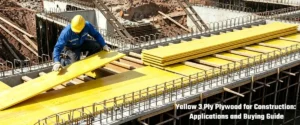
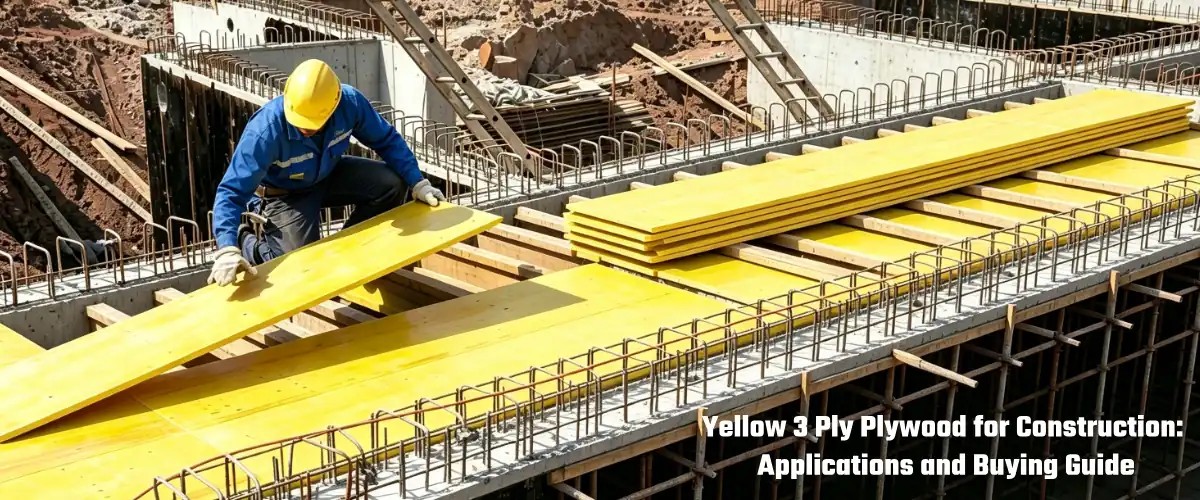
Yellow 3 Ply Plywood is a lightweight three-layer plywood panel used in construction, interior finishing, furniture, and general building applications. Its simple structure makes it easy to handle, cut, and install on site. For buyers, however, choosing the right panel requires more than checking its yellow surface. Thickness, core material, bonding performance, surface treatment, and intended use should all be considered before placing an order.
What Is Yellow 3 Ply Plywood?
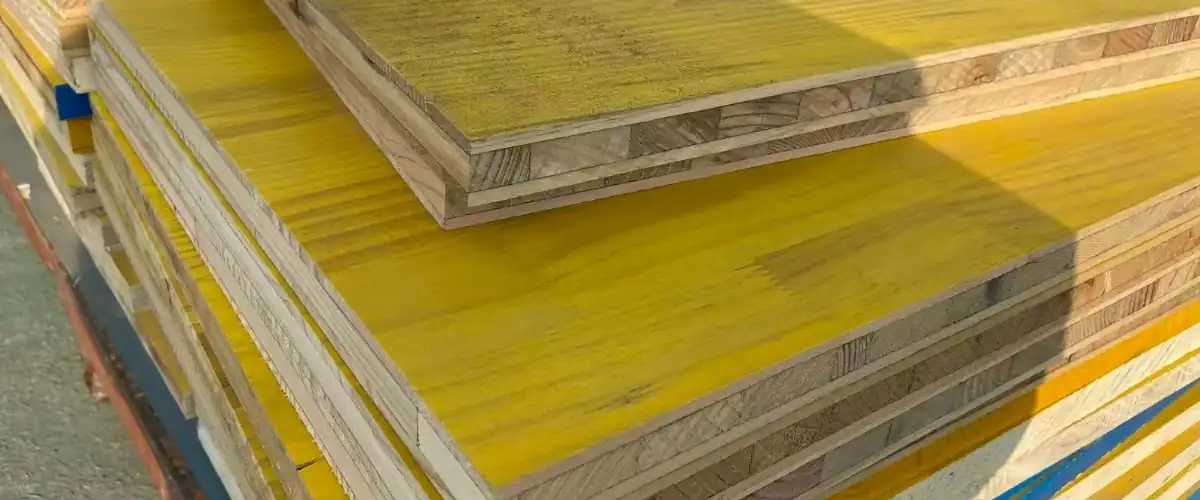
3 Ply Plywood is made by bonding three veneer layers together, usually with the grain direction arranged to improve panel stability. The outer veneers provide the visible surfaces, while the core layer forms the center of the panel.
The yellow surface is a distinguishing feature of this type of plywood. Depending on the manufacturing specification, the yellow appearance may come from a coating, paint, film, or other surface treatment. Buyers should confirm the actual surface construction with the supplier rather than assuming that the color indicates a particular performance level.
Compared with thicker multi-ply panels, three-layer plywood can be easier to carry and process. This makes it suitable for projects where practical handling and efficient installation are important.
For buyers looking for a broader range of plywood materials, our plywood products provide additional options for different construction and industrial requirements.
Key Features of Yellow 3 Ply Plywood
Several characteristics make Yellow 3 Ply Plywood useful for general building applications.
Three-Layer Construction
The three-layer structure provides a straightforward panel construction while keeping the panel relatively lightweight. Its performance depends on the veneer quality, core material, thickness, adhesive, and manufacturing process.
Easy Handling and Processing
A lighter plywood panel can be easier for workers to move, cut, drill, and install. This can be useful on construction sites where panels need to be handled frequently.
Recognizable Yellow Surface
The yellow finish provides a distinctive appearance and can help identify panels during handling and installation. The actual durability, moisture resistance, and surface performance depend on the treatment used.
Flexible Applications
Depending on its specifications, Yellow 3 Ply Plywood can be used for interior panels, partitions, temporary structures, furniture components, and other general building applications.
Applications of Yellow 3 Ply Plywood in Construction
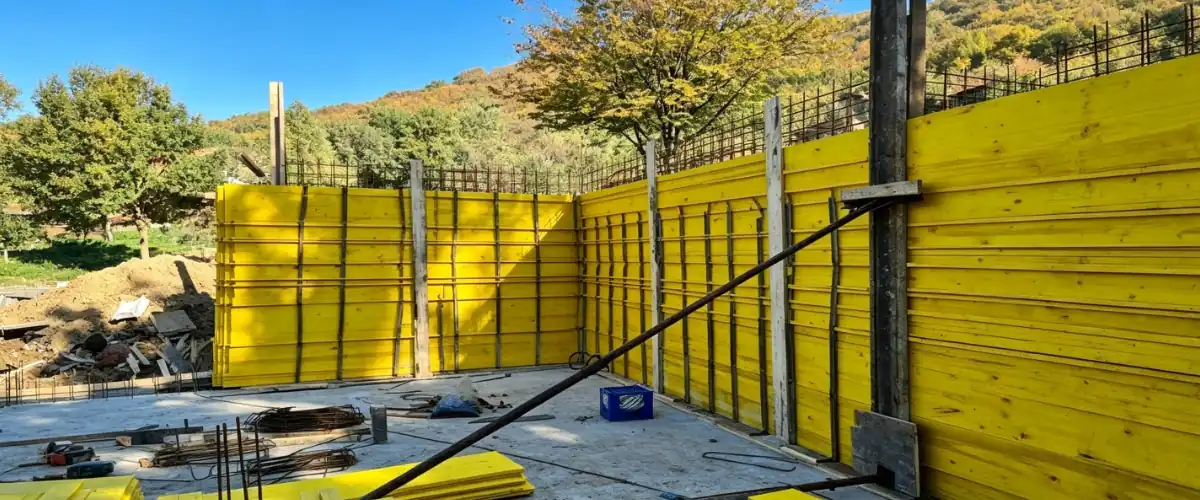
Yellow 3 Ply Plywood can serve different purposes across construction and interior projects. The appropriate application should always be determined according to the panel specification and project requirements.
1. Interior Wall and Partition Panels
Three-layer plywood can be used for interior wall lining, temporary partitions, and other panel-based installations. Its manageable weight can make transportation and on-site installation more convenient.
For projects requiring a decorative or finished wood surface, buyers may also consider different types of wood veneer for appearance-focused applications.
2. Temporary Construction Structures
Construction sites often require temporary panels for barriers, coverings, partitions, and work areas. Yellow 3 Ply Plywood can be considered for these applications when its thickness and strength meet the project requirements.
Before ordering, buyers should confirm whether the panels are intended for temporary use, repeated handling, or a specific loading condition.
3. Ceiling and Interior Fit-Out
Plywood panels are also used in interior fit-out projects. Three-layer panels can be suitable for selected ceiling, lining, and decorative applications where the required specifications are within the product’s performance range.
4. Furniture and Joinery
Although the focus is on construction, 3 Ply Plywood can also be used for furniture components, cabinets, packaging structures, and general joinery. Cutting and machining requirements should be considered when selecting the veneer and core materials.
5. Protection and Covering
Plywood can be used as a temporary protective panel for floors, surfaces, equipment, and materials during construction or renovation. The surface treatment and thickness should be selected according to the level of protection required.
Yellow 3 Ply Plywood vs. Multi-Ply Plywood
The main difference between three-layer and multi-ply plywood is the number of veneer layers. Yellow 3 Ply Plywood contains three layers, while multi-ply plywood contains more layers and is available in a wider range of constructions and thicknesses.
Three-layer plywood can be a practical choice when lightweight handling and general panel applications are priorities. Multi-ply plywood may be selected when a project requires greater thickness, specific structural performance, or a different panel construction.
Therefore, the number of layers alone should not determine the purchase decision. The complete plywood specification should be evaluated against the intended application.
How to Choose Yellow 3 Ply Plywood
B2B buyers should check several specifications before purchasing Yellow 3 Ply Plywood.
Thickness: Select the thickness according to the installation method, required rigidity, and application.
Core material: Poplar, eucalyptus, combi, and other core options can affect weight, strength, machining, and stability.
Adhesive: Confirm the glue type and bonding grade, particularly when the plywood will be exposed to moisture or changing environmental conditions.
Surface treatment: Ask whether the yellow surface is created with paint, film, coating, or another treatment. This helps buyers understand the actual surface characteristics.
Panel size: Confirm standard or custom dimensions according to project requirements and container loading plans.
Quality requirements: For larger orders, buyers should discuss thickness tolerance, moisture content, bonding quality, packaging, and inspection procedures with the supplier.
If your project requires plywood with a specific surface or construction, custom specifications can be discussed with the manufacturer before production.
What Should Buyers Confirm Before Ordering?
For international plywood purchasing, product specifications are only one part of the decision. Buyers should also confirm packaging, loading methods, documentation, production lead time, and quality inspection arrangements.
A reliable plywood supplier should be able to provide clear product specifications and communicate the available options before an order is confirmed. For repeat purchasing, consistent quality and stable production are also important factors.
Buyers should avoid selecting plywood based only on color or price. A yellow surface does not by itself define the strength, moisture resistance, or suitability of a panel for a particular construction application.
Summary
Yellow 3 Ply Plywood is a practical three-layer panel for selected construction, interior, furniture, and temporary building applications. Its lightweight structure and distinctive yellow surface can make it convenient for certain projects, but the correct choice depends on thickness, core material, adhesive, surface treatment, and required performance.
For international projects, confirming the complete specification before production helps ensure that the plywood matches the intended application and shipping requirements.
Contact huixinWood to discuss Yellow 3 Ply Plywood specifications, custom requirements, packaging, and export orders.