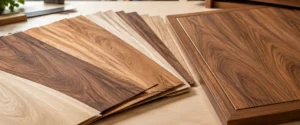
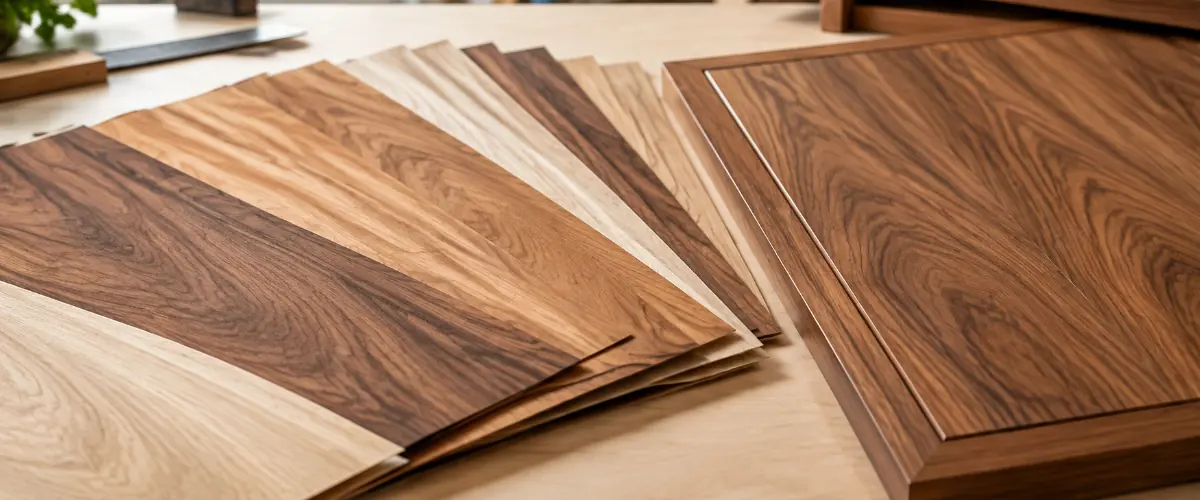
Veneer matching is an important step in furniture manufacturing because the way wood veneer sheets are arranged affects the appearance of cabinet doors, drawer fronts, wardrobes, and decorative panels. Even when sheets come from the same wood species, differences in grain direction, color, and natural markings can change the look of a finished surface. Choosing the right matching method helps manufacturers achieve a more coordinated design and establish clear quality expectations before production begins.
For furniture makers and veneer buyers, the goal is not always to make every panel look identical. It is to select and arrange veneer sheets according to the intended design, product requirements, and acceptable level of natural variation.
Common Veneer Matching Methods
Different veneer matching methods create different visual effects. The right choice depends on the furniture design, panel dimensions, and appearance requirements.
Book Matching
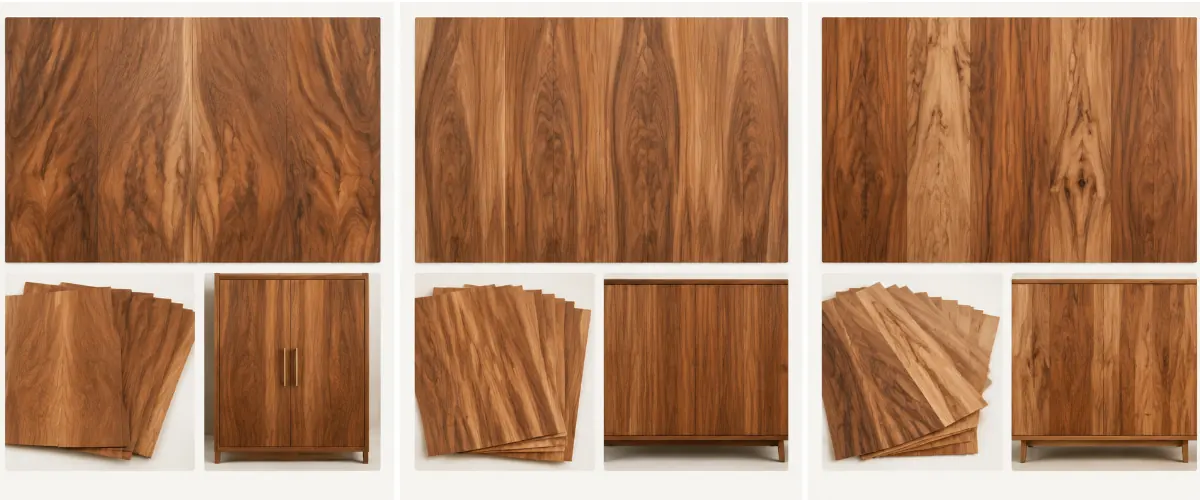
Book matching places adjacent veneer leaves next to each other in alternating orientations, creating a mirror-like pattern. This method can produce a symmetrical appearance that works well for cabinet doors, wall panels, and decorative furniture fronts.
Because the grain is reflected across the joint, the result can look balanced and visually distinctive. However, light reflection may make adjacent leaves appear slightly different in shade, even when they come from the same flitch. Buyers should review an actual sample before approving a large order.
Slip Matching
Slip matching places adjacent veneer leaves side by side in the same orientation. The grain generally continues in one direction rather than forming a mirrored pattern.
This approach is useful when a more consistent, repeating grain direction is preferred, such as on some cabinet fronts and long decorative panels. The final appearance still depends on the wood species, leaf selection, and finishing process.
Random Matching
Random matching uses veneer leaves arranged without a strict mirrored sequence. It can create a more varied, natural-looking surface and may suit rustic furniture or designs that do not require symmetrical grain.
The acceptable level of variation should be agreed upon before production. Random matching does not mean that every sheet can be selected without considering color, grain, or visible defects.
How to Coordinate Grain and Color
Successful veneer matching starts with clear appearance requirements. Buyers should consider several factors before approving the material.
Grain direction: Decide whether the grain should run horizontally, vertically, or in a specified sequence across adjoining panels. Consistent direction is particularly important for furniture sets with several visible components.
Color variation: Natural wood veneer can show differences in tone and markings. Define the acceptable color range rather than assuming every sheet will be identical. Lighting and surface finish can also influence the perceived color.
Leaf sequence: Where visual continuity matters, ask the supplier to identify and arrange related veneer leaves in the intended sequence. This is especially useful for symmetrical cabinet fronts or large decorative surfaces.
Surface finish: Stains, clear coats, and other finishes can change how grain and color appear. Whenever possible, evaluate the veneer using a sample finished in a way that closely represents the final product.
For projects using natural materials, buyers can review the available natural wood veneer products and confirm which appearance requirements can be supported by the selected species and supply batch.
Matching Veneer Across Furniture Components
Matching individual sheets is only part of the process. Manufacturers may also need to coordinate cabinet doors, drawer fronts, side panels, and other visible components within one furniture unit.
First, identify which surfaces must look continuous or symmetrical. Then specify the desired grain direction and matching method for those areas. Where panels will be viewed together, assess them side by side rather than approving each panel separately.
For larger orders, it is useful to separate critical visible components from areas where natural variation is acceptable. This gives the production team clearer instructions and helps prevent unnecessary rework.
Engineered veneer may also be considered when a project requires a more controlled decorative pattern. Buyers can review reconstituted Gurjan wood veneer as an example of an engineered veneer option, then confirm the available patterns, specifications, and suitability with the supplier. Actual consistency depends on the product and manufacturing controls.
Approve Samples Before Bulk Production
Before placing a bulk order, buyers should confirm the matching requirements with their veneer supplier. A practical approval process includes:
- Specify the veneer species or product, dimensions, thickness, and intended application.
- State the preferred matching method, such as book matching or slip matching.
- Confirm acceptable variation in grain, color, and natural markings.
- Review sample sheets together in the intended sequence.
- Check the appearance under suitable lighting and, where relevant, after finishing.
- Agree on how the approved sample will be used as a reference during production and inspection.
For projects involving multiple shipments, buyers should also ask how batch identification and appearance checks will be handled. These details help align purchasing, production, and quality control teams before manufacturing starts.
Conclusion
Veneer matching helps furniture manufacturers control the visual relationship between adjacent sheets and finished components. Book matching creates a mirrored pattern, slip matching emphasizes a consistent grain direction, and random matching allows greater visual variation. The best method depends on the design and the project’s appearance requirements.
By defining grain direction, color expectations, panel relationships, and sample approval procedures before bulk production, buyers can reduce uncertainty and communicate more clearly with suppliers. For your next furniture project, contact HuixinWood to discuss veneer options, matching requirements, and samples before confirming your order.