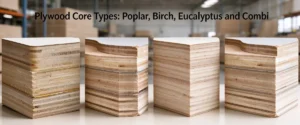
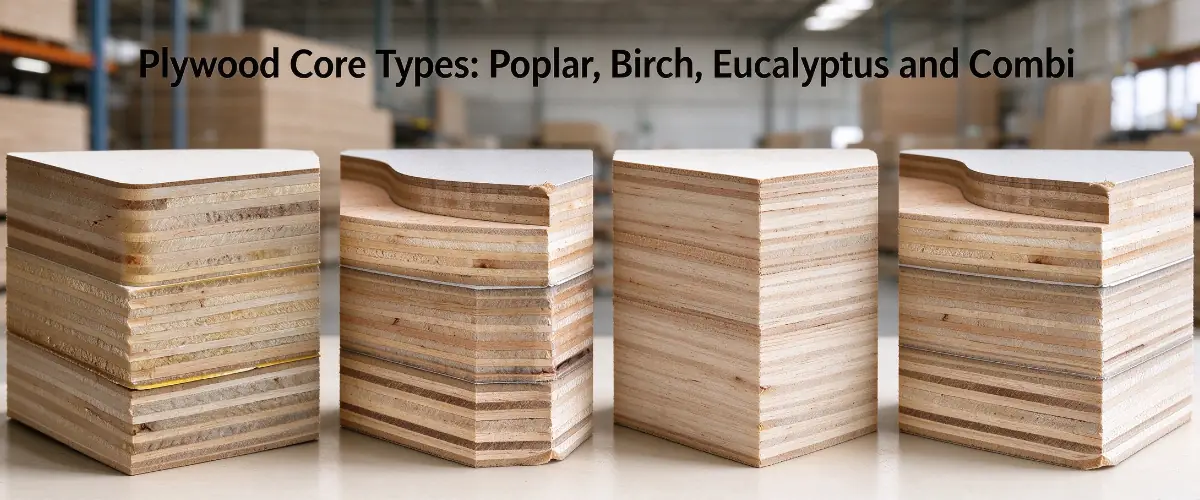
Choosing the right plywood core types is important when sourcing panels for furniture, construction, packaging, and interior applications. Core materials influence panel weight, strength, machining performance, and appearance. However, finished-panel performance also depends on veneer quality, thickness, adhesive, and manufacturing standards.
Poplar, birch, eucalyptus, and combi are common core options. Each has different characteristics, so buyers should select materials according to project requirements rather than assuming one core is always superior.
Our Plywood Buying Guide provides additional guidance on plywood grades, thickness, adhesives, and quality inspection.
What Is a Plywood Core?
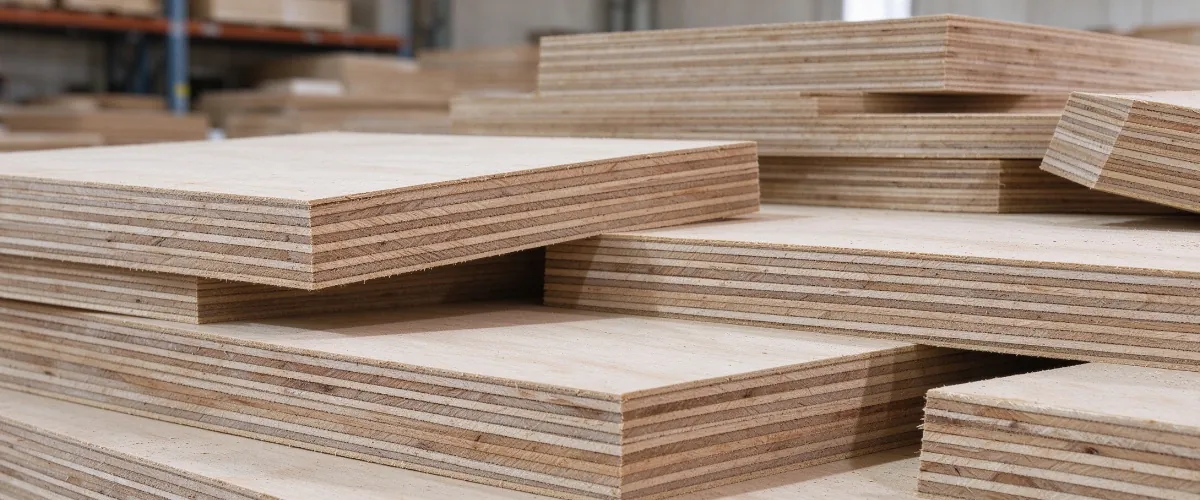
A plywood core is the internal structure between the face and back veneers. Thin wood veneers are bonded in layers, typically with adjacent layers arranged in different grain directions to improve stability.
The core may use one wood species or a combination of species. Its construction affects weight, internal consistency, edge appearance, and suitability for machining. Buyers should also consider veneer thickness, layer arrangement, bonding quality, and moisture content.
4 Common Plywood Core Types and Their Characteristics
1. Poplar Core Plywood
Poplar core plywood is often selected when relatively low weight and practical processing are priorities. Its lightweight characteristics can benefit manufacturers handling large panels or producing furniture components.
- Weight: Generally lightweight compared with many denser hardwood options.
- Strength: Depends on thickness, veneer quality, construction, and bonding.
- Appearance: Usually light-colored, with variations in grain.
- Machining: Suitable for conventional cutting and woodworking.
- Applications: Furniture, interior panels, packaging, and general-purpose plywood.
Poplar can be a practical option when weight and workability matter. For load-bearing applications, buyers should verify the finished panel’s mechanical properties rather than relying on the wood species alone.
2. Birch Core Plywood
Birch core plywood is used in applications requiring consistent panel construction and good machining performance. Birch veneers typically have a light color and relatively fine grain, making them suitable for various furniture and precision-processing projects.
- Weight: Often heavier than comparable poplar core panels.
- Strength: Depends on panel construction and manufacturing quality.
- Appearance: Generally light-colored with fine grain.
- Machining: Suitable for cutting, drilling, routing, and CNC processing.
- Applications: Furniture, cabinets, shelving, and precision components.
Buyers should distinguish all-birch plywood from panels that use birch only for the face veneer. Learn more in our Birch Plywood Complete Guide.
3. Eucalyptus Core Plywood
Eucalyptus core plywood is another option for commercial sourcing. Eucalyptus species vary in density and physical properties, so the finished panel’s performance depends on the material and manufacturing process.
- Weight: Can be medium to high, depending on species and construction.
- Strength: Should be evaluated using relevant finished-panel test results.
- Appearance: Color and grain vary by species and veneer quality.
- Machining: Depends on veneer characteristics and bonding quality.
- Applications: Furniture, commercial panels, and selected industrial uses.
When evaluating eucalyptus core, buyers should confirm panel weight, bonding performance, and mechanical properties against the intended application. It should not automatically be considered stronger than other core options.
4. Combi Core Plywood
Combi core plywood combines different wood species within the core structure. The actual combination and veneer arrangement vary by manufacturer, so buyers should confirm the composition before ordering.
- Weight: Varies according to species and layer arrangement.
- Strength: Depends on veneer quality, construction, and bonding.
- Appearance: Internal colors and grain may differ between layers.
- Machining: Depends on core consistency and manufacturing quality.
- Applications: Commercial plywood, furniture components, and general-purpose panels.
Combi core can help manufacturers balance product requirements and material availability. However, it is not automatically cheaper or better than single-species construction.
Plywood Core Types Compared
When comparing different plywood core types, evaluate the complete panel rather than relying on wood species alone.
| Factor | Poplar | Birch | Eucalyptus | Combi |
|---|---|---|---|---|
| Weight tendency | Generally light | Often medium to high | Varies by species | Varies by composition |
| Main consideration | Weight and workability | Consistency and machining | Verified performance | Defined species combination |
| Typical applications | Furniture, packaging | Cabinets, CNC parts | Commercial and industrial uses | Commercial and furniture panels |
These are general tendencies, not guaranteed performance rankings. Compare samples with equivalent thicknesses and specifications to make meaningful purchasing decisions.
How to Choose the Right Plywood Core
1. Define the Application
Identify whether the panels will be used for furniture, shelving, packaging, interiors, or construction. Each application has different requirements for weight, strength, appearance, and moisture resistance.
2. Confirm Thickness and Structure
Ask suppliers to specify panel thickness, tolerance, number of layers, core species, and veneer arrangement. These details help buyers compare products accurately.
3. Check Bonding Requirements
Choose an adhesive system suitable for the intended service environment. For moisture-prone applications, confirm the required bonding performance and applicable test standards. No core species alone guarantees waterproof performance.
4. Request Samples and Test Data
Before placing bulk orders, inspect cut edges, internal gaps, and veneer consistency. Request technical specifications and relevant test reports where necessary.
You can also explore Pine Plywood when comparing alternative wood materials for specific applications.
Contact HuixinWood for Plywood Core Selection
The right core depends on the intended application, production process, and required panel performance. HuixinWood supports B2B buyers sourcing plywood for furniture, construction, and interior projects.
Share your required dimensions, thickness, face veneer, core preference, adhesive requirements, and destination market to help identify suitable specifications.
Contact HuixinWood to discuss plywood options and request product information for your project.