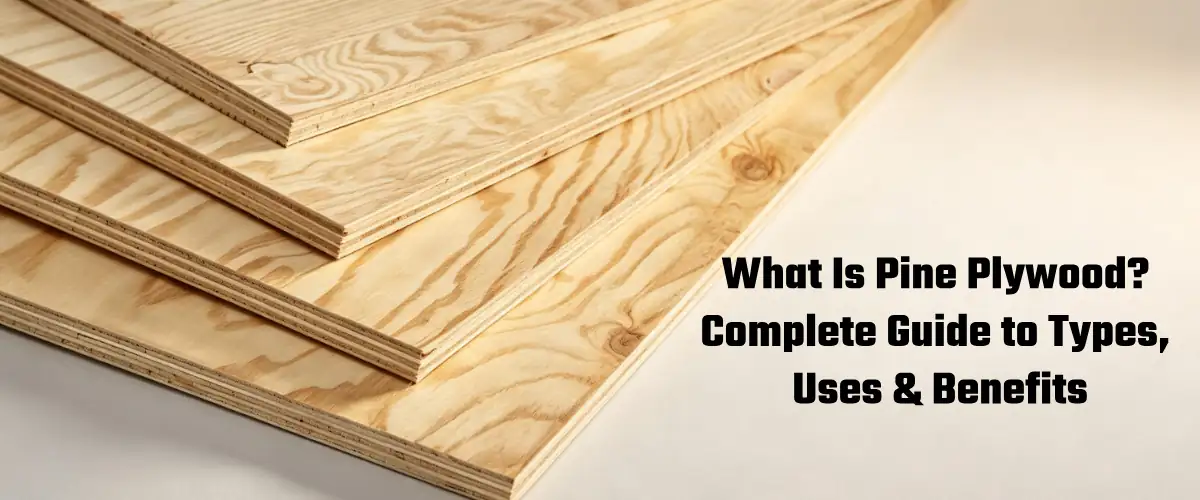
What is pine plywood? Pine plywood is a wood panel made by bonding multiple thin layers of pine veneer together, with the grain direction of adjacent layers arranged at right angles. This cross-laminated structure provides good strength, dimensional stability, and versatility. Pine plywood is widely used in furniture, interior construction, packaging, shelving, and other woodworking projects.
For buyers, important factors include plywood grade, thickness, core construction, glue type, surface quality, and the intended application. Understanding these factors makes it easier to select the right panel for a specific project.
How Is Pine Plywood Made?
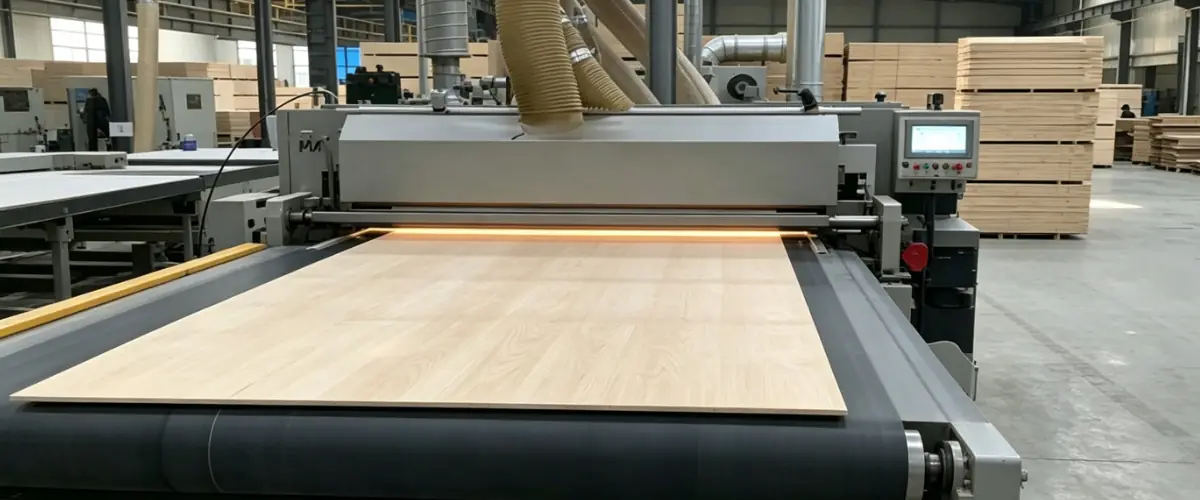
Pine plywood is produced through several manufacturing stages. First, suitable pine logs are selected according to their size, moisture content, and wood quality. The logs are then peeled or processed into thin veneers.
The veneers are dried to achieve a suitable moisture level before being graded. Higher-quality veneers are normally selected for visible faces, while other veneers can be used in the core.
Next, the veneers are arranged in layers with their grain directions running alternately. Adhesive is applied between the layers, and the assembled panel is pressed under controlled temperature and pressure. Finally, the plywood is trimmed, sanded, graded, and inspected before packaging.
The number of veneer layers and their thickness depend on the final panel thickness and required performance.
Pine Plywood Structure
The structure of pine plywood usually consists of several cross-laminated veneer layers.
- Face veneer: Provides the visible surface and contributes to appearance.
- Core veneers: Build the thickness and structural strength of the panel.
- Back veneer: Balances the panel and provides a finished rear surface.
- Adhesive layers: Bond the veneers together and maintain panel integrity.
Because the veneer grains run in different directions, plywood can provide better dimensional stability than a single solid wood board of similar size.
Pine Plywood Characteristics
Knowing what is pine plywood can help buyers understand why its layered construction provides a useful balance of strength, weight, and stability.Pine plywood has several characteristics that make it useful for woodworking and construction.
Lightweight Construction
Pine is generally lighter than many dense hardwoods. This can make pine plywood easier to transport, handle, cut, and install.
Good Strength-to-Weight Ratio
The cross-laminated structure distributes loads across multiple veneer layers, providing useful strength without making the panel unnecessarily heavy.
Easy Machining
Pine plywood can generally be cut, drilled, routed, sanded, and processed with standard woodworking equipment. This makes it suitable for customized furniture and CNC projects.
Natural Appearance
Depending on the grade, pine plywood can have a recognizable natural wood grain and knots. It can be painted, stained, laminated, or finished with other decorative materials.
Dimensional Stability
Compared with solid pine boards, plywood construction can reduce the effects of grain-related movement and provide a more stable large-format panel.
Pine Plywood Grades
Pine plywood grades usually describe the quality and appearance of the panel surfaces. However, grading systems can differ between manufacturers and markets.
Higher grades generally have cleaner faces with fewer knots, patches, splits, and other visible defects. Lower grades may contain more natural wood characteristics and can be suitable for concealed components, packaging, or applications where appearance is less important.
When purchasing plywood for furniture or visible interior surfaces, buyers should pay particular attention to the face and back grades rather than relying only on the product name.
Pine Plywood Thickness
Pine plywood is available in various thicknesses. Common options may include 3 mm, 6 mm, 9 mm, 12 mm, 15 mm, 18 mm, and 21 mm, although exact specifications vary by supplier.
Thinner panels are often used for backing boards, lightweight furniture components, and interior applications. Medium and thicker panels can be used for shelving, cabinets, partitions, furniture structures, and construction projects.
Thickness should be selected according to the expected load, panel span, fixing method, and application rather than price alone.
Pine Plywood Applications
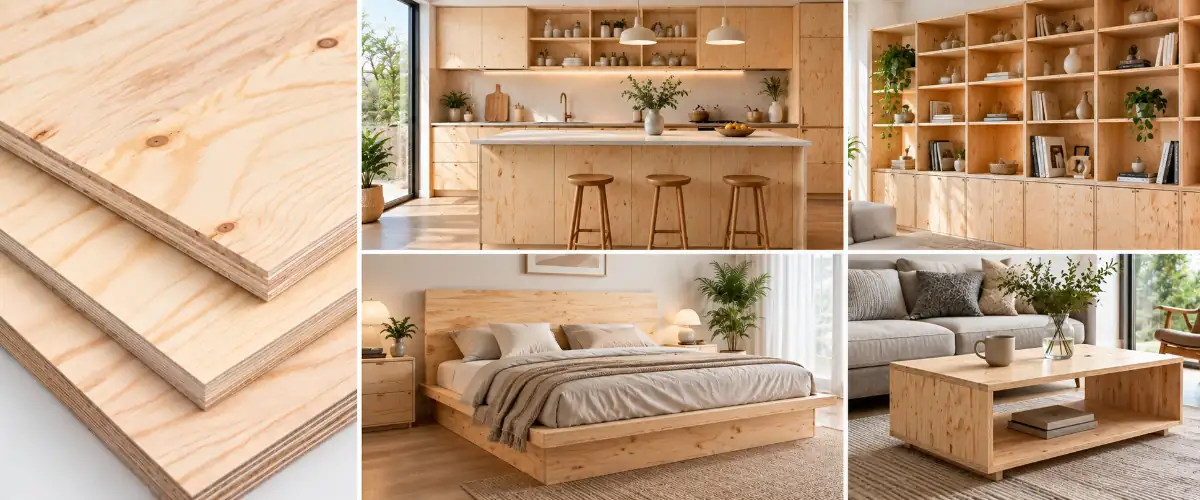
Pine plywood is suitable for a wide range of applications, including:
- Furniture and cabinet components
- Shelving and storage systems
- Interior walls and ceilings
- Doors and partitions
- Packaging and wooden crates
- DIY woodworking projects
- Shop fittings and displays
- Construction and temporary structures
- Decorative panels
Its relatively easy machinability also makes it useful for customized components and CNC cutting.
Advantages and Disadvantages of Pine Plywood
Advantages
The main advantages of pine plywood include its lightweight structure, good strength-to-weight ratio, natural appearance, easy machining, dimensional stability, and versatility.
It can also provide a practical balance between performance and cost, especially when the project does not require the density or surface uniformity of premium hardwood plywood.
Disadvantages
Pine plywood may contain knots and other natural wood characteristics, particularly in lower grades. The surface may also require additional finishing for decorative applications.
Standard interior-grade pine plywood should not automatically be considered waterproof. For outdoor or humid environments, buyers should confirm the adhesive type, moisture resistance, panel construction, and relevant certifications.
Pine Plywood vs Other Plywood
Pine plywood is commonly compared with birch plywood, poplar plywood, and other hardwood plywood.
Birch plywood generally has a denser and more uniform structure and is often selected for premium furniture, cabinetry, and demanding CNC applications. Poplar plywood is usually lighter and can be useful when weight reduction is important.
Pine plywood offers a balance of natural appearance, workability, strength, and cost. The best choice depends on the required performance, appearance, weight, and budget.
How to Choose Pine Plywood
When selecting pine plywood, consider the following factors:
- Application: Determine whether the panel will be used for furniture, construction, packaging, or another purpose.
- Grade: Select the face quality according to appearance requirements.
- Thickness: Match the thickness to the expected load and structural requirements.
- Glue type: Choose adhesive suitable for the required moisture conditions.
- Core quality: Check for excessive gaps, overlaps, or poorly bonded veneers.
- Surface condition: Look for cracks, open knots, delamination, and excessive sanding.
- Certifications: Confirm applicable certifications and test reports for commercial projects.
- Supplier capability: Consider production capacity, quality control, packaging, and export experience.
For bulk purchasing, requesting samples and technical specifications before placing an order can help buyers evaluate quality more accurately.
Frequently Asked Questions
Is Pine Plywood Strong?
Yes. Properly manufactured pine plywood can provide good strength and dimensional stability. Actual performance depends on thickness, veneer quality, panel construction, and adhesive.
Is Pine Plywood Waterproof?
Not necessarily. Standard pine plywood is not automatically waterproof. Exterior or moisture-prone applications require suitable glue and panel construction.
Is Pine Plywood Good for Furniture?
Yes. Pine plywood is suitable for many furniture applications because it is relatively lightweight, easy to machine, and available in different thicknesses and surface grades.
What Is Pine Plywood Best Used For?
If you are considering what is pine plywood best suited for, common applications include furniture, shelving, interior construction, packaging, shop fittings, and woodworking projects. The appropriate grade and thickness depend on the specific application.
Is Pine Plywood Better Than Solid Pine?
Neither material is universally better. Pine plywood generally offers better large-panel stability and consistency, while solid pine provides the characteristics and appearance of natural solid wood.
Choosing the Right Pine Plywood
Pine plywood combines the natural characteristics of pine with the stability of cross-laminated plywood construction. Its strength, lightweight structure, natural appearance, machinability, and versatility make it suitable for furniture, interiors, packaging, and construction.
When choosing a panel, buyers should consider more than price. Grade, thickness, core quality, glue type, surface condition, certifications, and intended application all influence the final performance of the plywood.
If you are sourcing pine plywood for furniture, construction, packaging, or other projects, Huixinwood can provide suitable specifications based on your requirements. Contact us for pine plywood specifications, samples, pricing, and a customized quotation to find the right solution for your project.