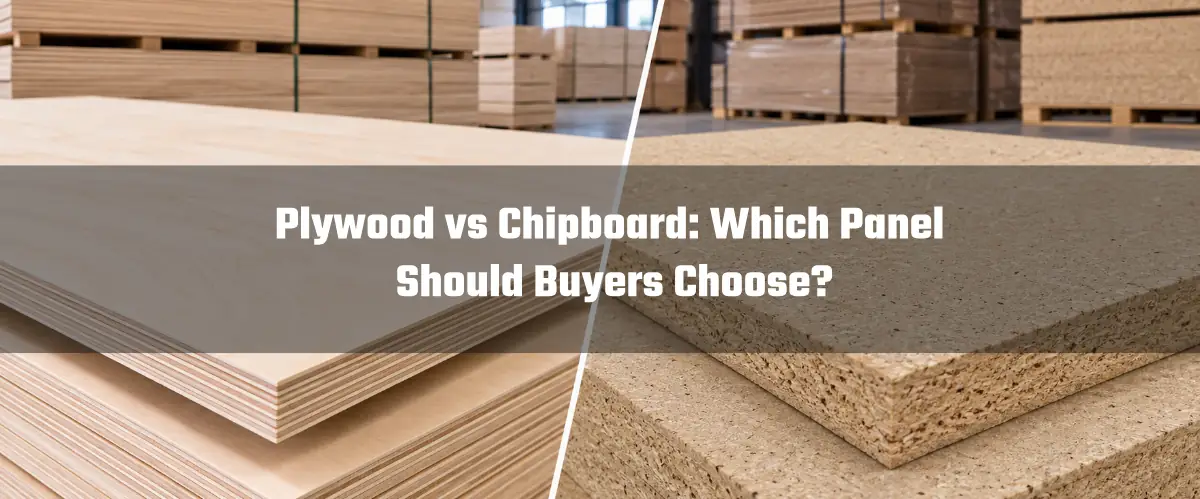
When comparing plywood vs chipboard, B2B buyers need to consider more than material cost. Panel construction, strength, moisture performance, surface finish, machining requirements and the final application can all affect the right choice.
Plywood and chipboard are both widely used wood-based panels, but they are manufactured differently and serve different production requirements. For furniture manufacturers, cabinet producers, distributors and importers, understanding these differences can help buyers select a panel that matches the application.
Plywood vs Chipboard: What Is the Difference?
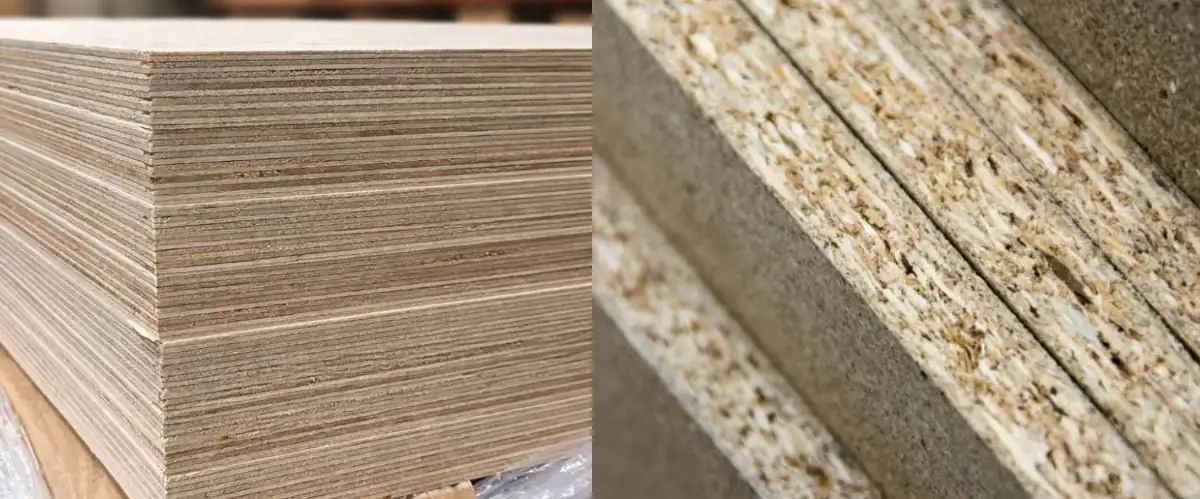
Plywood is manufactured by bonding thin layers of wood veneer together, with the grain direction of adjacent layers generally arranged in different directions. This cross-laminated structure helps provide strength and dimensional stability.
For buyers who need more information about plywood grades, thickness, core construction, glue and surface quality, our Plywood Buying Guide provides a practical checklist for evaluating plywood specifications.
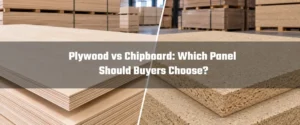
Chipboard, also called particle board, is made from wood particles bonded with resin and pressed into panels. Its relatively uniform structure and smooth surface make it widely suitable for furniture and interior applications, particularly when the panel receives a decorative surface such as melamine, veneer or laminate.
The main difference is therefore the panel structure: plywood is built from veneer layers, while chipboard is produced from wood particles.
Plywood vs Chipboard: Key Differences
| Factor | Plywood | Chipboard |
|---|---|---|
| Construction | Cross-laminated wood veneers | Compressed wood particles |
| Strength | Generally higher | Moderate, depending on grade |
| Dimensional stability | Generally very good | Suitable for typical interior applications |
| Screw holding | Generally good | Suitable for many furniture applications |
| Surface | Veneer-based or finished surface | Smooth, uniform surface |
| Machining | Good | Good for furniture production |
| Furniture use | Furniture, cabinets, shelving and demanding applications | Cabinets, wardrobes, office furniture and shelving |
| Cost efficiency | Often selected for performance | Often selected for economical panel production |
| Structural use | Available in structural grades | Generally intended for non-structural applications |
The actual performance of either material depends on thickness, density, grade, adhesive system, construction and intended use. Buyers should therefore compare technical specifications rather than selecting a panel based only on its material name.
Strength and Durability
Strength is one of the main reasons buyers compare plywood vs chipboard.
Plywood’s layered construction can provide a favorable combination of strength, stiffness and dimensional stability. This makes plywood suitable for applications where panels need to withstand higher loads, repeated use or more demanding mechanical conditions.
For example, Birch Plywood is widely used in furniture, CNC machining and other applications where strength, dimensional stability and surface quality are important.
Chipboard can also provide reliable performance when correctly specified. It is commonly used for furniture and interior components where extreme structural performance is not the primary requirement.
For B2B buyers, the important question is not simply which panel is stronger, but how much strength the application actually requires.
Plywood vs Chipboard for Furniture
Both materials are widely used in furniture manufacturing, but they can serve different production requirements.
Plywood May Be Suitable for:
- Furniture requiring higher strength
- Shelving and load-bearing components
- Cabinets exposed to frequent use
- Furniture where screw-holding performance is important
- Applications requiring a more durable panel structure
For furniture manufacturers looking for a decorative plywood option, Fancy Plywood for Furniture can also be considered when natural wood appearance and plywood construction are both important.
Chipboard May Be Suitable for:
- Wardrobes and cabinets
- Office furniture
- Shelving systems
- Ready-to-assemble furniture
- Large-volume furniture production
- Panels requiring melamine or other decorative finishes
Chipboard is particularly practical for manufacturers producing large quantities of cabinets, wardrobes and other furniture components. HuixinWood’s Chipboard is available in different thicknesses, sizes and surface options, including raw, melamine, veneer, paper, UV coating and HPL.
For furniture manufacturers, surface requirements are also important. A buyer may choose chipboard because a consistent decorative surface is needed for a large production run, while another manufacturer may prefer plywood because panel strength and construction are higher priorities.
Moisture Resistance and Indoor Applications
Moisture performance should be evaluated based on the specific panel grade rather than assuming that one material is automatically moisture resistant.
For plywood, adhesive system, panel construction, veneer quality and exposure conditions all influence suitable applications. Buyers should therefore confirm the required glue type and performance classification before ordering.
Chipboard also comes in different grades and surface configurations. HuixinWood’s chipboard specifications include E0, E1 and E2 options, with moisture content and surface finish specified according to the product. Buyers should confirm the exact technical requirements for their target market and application.
For both materials, buyers should consider the actual environment, including humidity, occasional moisture exposure, edge protection and installation conditions.
Cost and Material Efficiency
Cost is another important factor in the plywood vs chipboard decision, especially for high-volume furniture manufacturing.
Chipboard is often selected for cost-efficient furniture and interior panel production. Its particle-based construction and consistent surface can support large-scale manufacturing.
Plywood is generally selected when buyers place greater emphasis on strength, durability, panel construction or specific performance requirements.
Instead of comparing price alone, B2B buyers should calculate the total material value based on the application’s requirements. A lower-cost panel may not be the most suitable choice if it requires additional reinforcement or does not meet the required performance level.
Which Panel Should Buyers Choose?
There is no single specification suitable for every project. The right choice depends on the application, required performance and production process.
Choose Plywood When:
- Higher strength is required
- Better screw-holding performance is important
- Panels will experience heavier loads
- Durability is a major consideration
- The application requires a stronger engineered wood panel
Choose Chipboard When:
- Cost-efficient furniture production is important
- Large-volume manufacturing is required
- Cabinets or wardrobes are the main application
- A consistent decorative surface is needed
- The panel will be used primarily for indoor furniture or interior components
The best approach is to match the panel specification with the actual end use rather than assuming that one material is universally better.
What Should B2B Buyers Check Before Ordering?
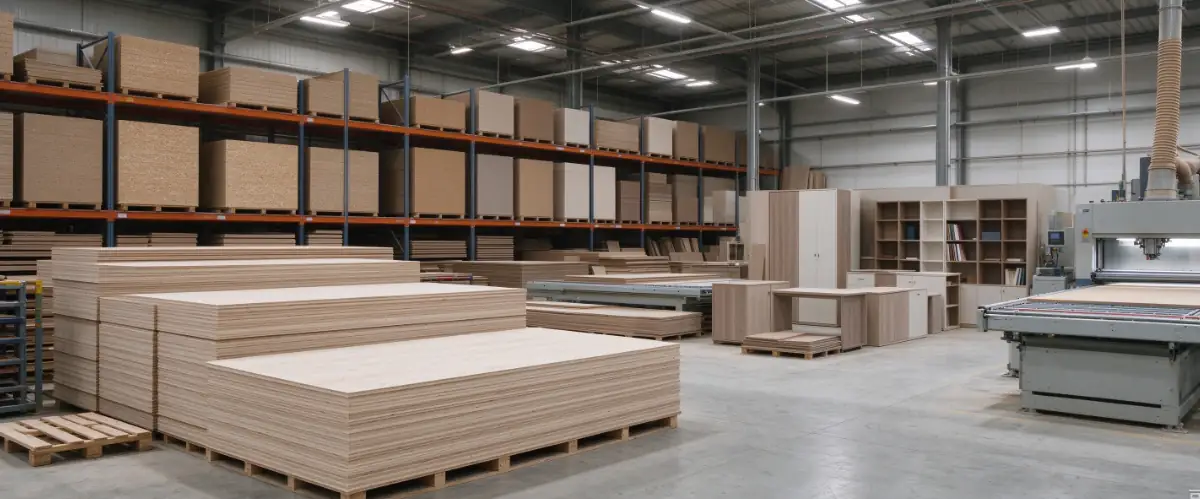
Before placing a bulk order, buyers should confirm:
- Panel thickness and dimensions
- Core or material construction
- Surface finish
- Density and mechanical requirements
- Moisture requirements
- Formaldehyde emission requirements
- Applicable certifications and standards
- Machining and edge requirements
- Packaging and loading specifications
- Pre-production samples and quality inspection
A detailed Plywood Buying Guide can help buyers understand how grade, thickness, core construction, face veneer and glue affect plywood selection.
For chipboard purchases, buyers can also refer to What Is Chipboard? Complete Guide to Types, Uses & Buying Tips to review chipboard types, applications, grades, emissions and quality factors.
For international sourcing, buyers should also confirm the applicable formaldehyde and product compliance requirements in the destination market.
Conclusion
The plywood vs chipboard comparison ultimately comes down to application requirements.
Plywood can be a practical choice when strength, durability and panel performance are priorities, while chipboard can be well suited to cost-efficient furniture and interior panel production.
For B2B buyers, the most reliable selection process is to compare panel construction, thickness, surface, moisture requirements, emissions, certifications and intended application before approving a product.
If you are sourcing plywood or chipboard for furniture, cabinetry or interior applications, contact HuixinWood to discuss suitable panel specifications, surface options and customized requirements.