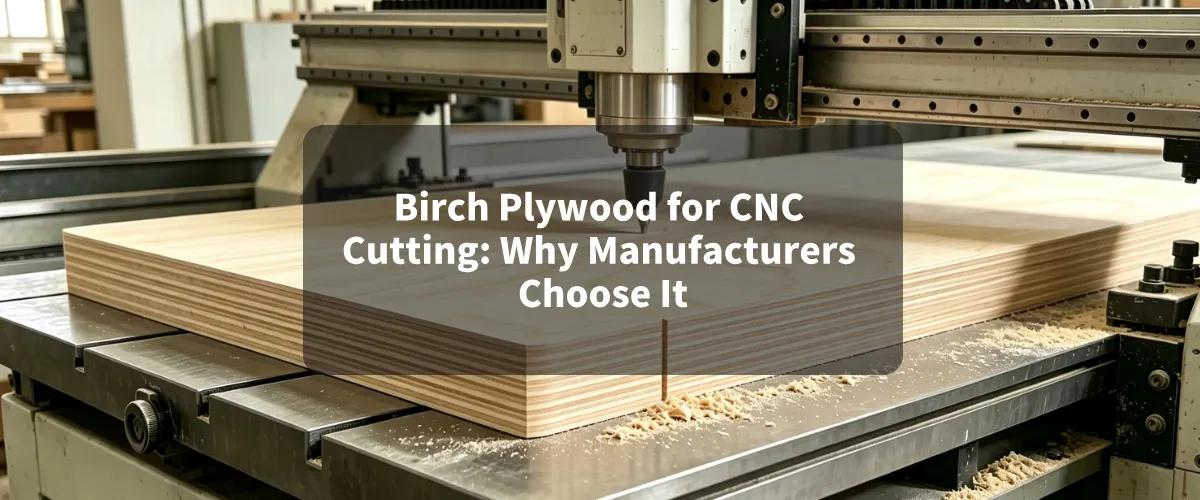
Birch Plywood for CNC Cutting has become a preferred material for manufacturers who need precise cutting, stable performance, and reliable machining results. With the increasing demand for CNC manufacturing, birch plywood is widely used in furniture, interior decoration, industrial components, and custom woodworking.
Compared with ordinary plywood, CNC birch plywood offers excellent strength, smooth surfaces, dimensional stability, and clean cutting performance, making it suitable for CNC routers and automated woodworking equipment.
Whether used for furniture production, decorative panels, or industrial components, birch plywood for CNC cutting provides consistent quality and helps manufacturers achieve accurate and efficient processing.
This article explains why manufacturers choose Birch Plywood for CNC Cutting, its advantages, applications, thickness options, and how to select the right plywood for CNC machining.
What Is Birch Plywood for CNC Cutting?
Birch plywood for CNC cutting refers to high-quality birch plywood panels specially selected or manufactured for precision CNC machining applications.
Unlike ordinary plywood, CNC-grade birch plywood requires:
- Uniform thickness
- Strong bonding between veneer layers
- Smooth and defect-free surfaces
- Stable structure during machining
- Clean edges after cutting
Birch plywood is made from multiple layers of birch veneer arranged with cross-grain construction. This structure improves strength, reduces deformation, and provides better stability during CNC processing.
During CNC cutting, machines remove material at high speed. Therefore, the plywood must maintain structural integrity without excessive chipping, splitting, or delamination.
Why Manufacturers Choose CNC Birch Plywood
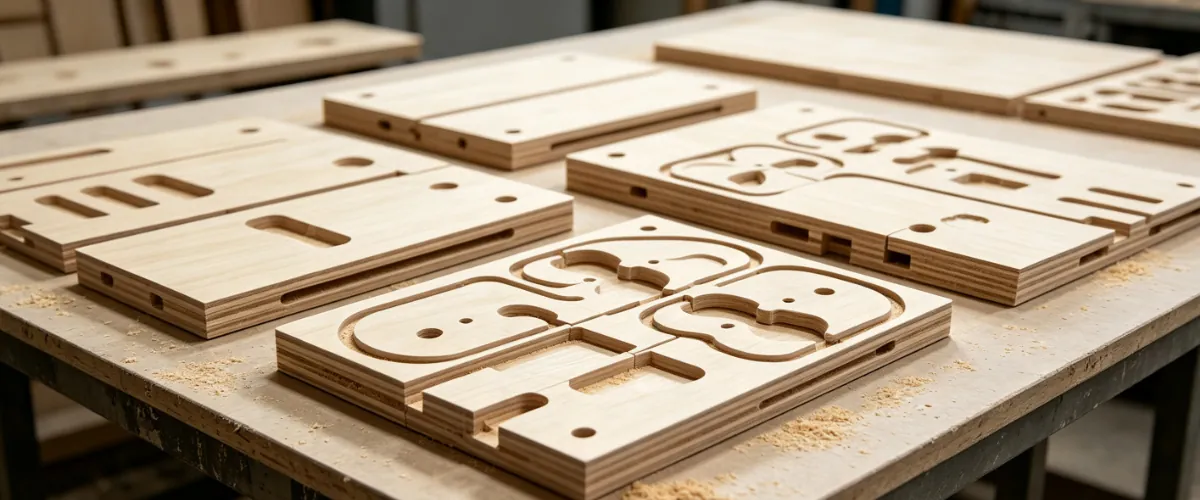
1. Excellent Machining Performance
One of the main reasons manufacturers choose birch plywood for CNC machining is its excellent processing performance.
Birch plywood has a dense and uniform structure, allowing CNC machines to achieve:
- Accurate dimensions
- Smooth cutting edges
- Detailed patterns
- Complex shapes
Compared with lower-grade plywood, high-quality birch plywood produces fewer defects during routing and engraving.
This helps manufacturers reduce:
- Material waste
- Production adjustments
- Additional finishing work
2. Smooth Surface for High-Quality Finishing
Birch plywood is known for its fine grain structure and smooth surface, making it suitable for applications where appearance matters.
After CNC cutting, the surface can easily receive different finishes, including:
- Painting
- Staining
- Clear coating
- Veneer overlay
- Lamination
For furniture manufacturers and interior designers, the clean appearance of birch plywood makes it ideal for visible components.
Common applications include:
- Cabinet doors
- Furniture panels
- Decorative wall panels
- Shelving systems
3. High Strength and Structural Stability
CNC machining requires plywood that can maintain its shape and performance after cutting.
The cross-laminated structure of birch plywood provides:
- High bending strength
- Excellent screw holding ability
- Low deformation
- Better dimensional stability
This stability is especially important for manufacturers producing:
- Furniture components
- Industrial parts
- Wooden structures
- Custom products
Compared with MDF, birch plywood generally offers better strength and durability for load-bearing CNC applications.
4. Clean CNC Cutting Results
The quality of CNC cutting depends heavily on the plywood structure and manufacturing process.
High-quality birch plywood helps achieve:
✔ Cleaner edges
✔ Less tear-out
✔ Reduced splintering
✔ More accurate details
This makes it a reliable choice for CNC routers that require precision cutting and consistent production results.
Manufacturers often select birch plywood because stable material quality helps improve machining efficiency and reduce production issues.
Birch Plywood CNC Applications
Due to its strength, stability, and machining advantages, birch plywood is widely used in various CNC manufacturing industries.
Furniture Manufacturing
Birch plywood is commonly used for CNC furniture production, including:
- Tables
- Chairs
- Cabinets
- Storage units
- Custom furniture parts
CNC equipment allows manufacturers to create accurate components with efficient production processes.
Interior Decoration
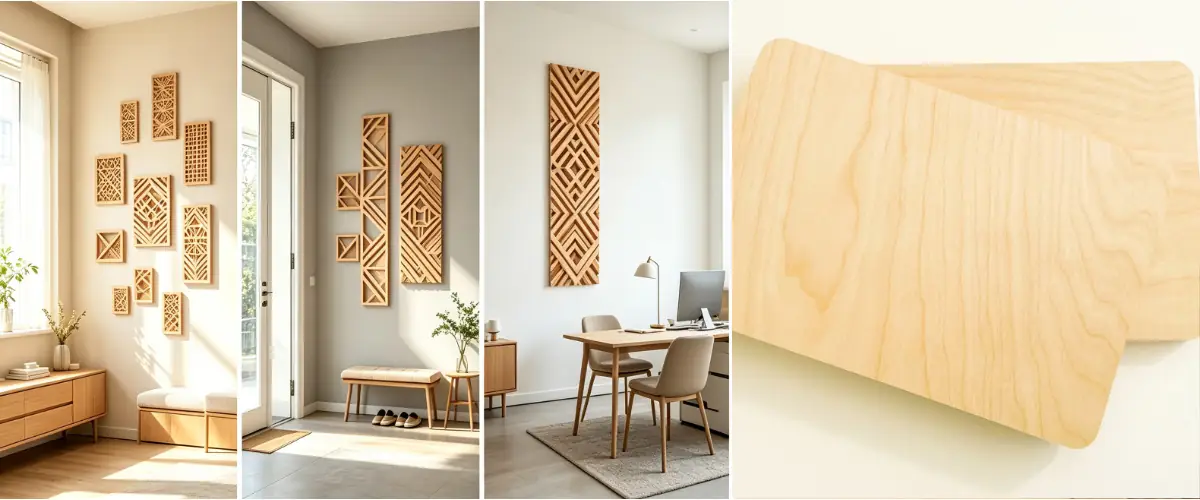
In interior projects, CNC-cut birch plywood panels are used for:
- Wall decoration
- Room dividers
- Ceiling panels
- Decorative patterns
The natural wood appearance creates a modern and premium look for residential and commercial spaces.
Architectural Models and Prototypes
Because birch plywood allows detailed cutting and engraving, it is widely used for:
- Architectural models
- Product prototypes
- Design samples
The smooth surface and accurate cutting performance help designers create professional-quality models.
Industrial Components
Many industrial manufacturers use birch plywood for CNC processing of:
- Machine covers
- Packaging structures
- Special equipment parts
- Custom wooden components
Its stable structure makes it suitable for precision manufacturing applications.
What Thickness of Birch Plywood Is Best for CNC Cutting?
The best thickness depends on the CNC machine, cutting depth, and final application.
| Thickness | Common Applications |
|---|---|
| 3mm – 6mm | Models, decorative panels, small components |
| 9mm – 12mm | Furniture parts, cabinet components |
| 15mm – 18mm | General CNC furniture production |
| 21mm – 25mm | Heavy-duty structures and industrial applications |
For most furniture CNC projects, 12mm and 18mm birch plywood sheets are commonly selected because they provide a good balance between strength and machining performance.
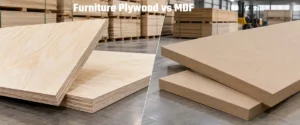
Birch Plywood vs MDF for CNC Cutting
Many manufacturers compare birch plywood and MDF when choosing materials for CNC machining.
| Feature | Birch Plywood | MDF |
|---|---|---|
| Strength | Higher | Medium |
| Screw holding | Excellent | Lower |
| Moisture resistance | Better | Lower |
| Edge quality | Good | Very smooth |
| Natural appearance | Excellent | Requires finishing |
| CNC performance | Excellent | Good |
MDF is often preferred for painted surfaces, while birch plywood is a better choice when strength, durability, and natural wood appearance are important.
How to Choose Quality Birch Plywood for CNC?
When purchasing Birch Plywood for CNC, manufacturers should consider the following factors:
1. Veneer Quality
High-quality birch plywood should have:
- Uniform veneer layers
- Minimal core gaps
- Smooth surfaces
- Consistent thickness
Poor veneer quality may cause cutting problems and reduce final product durability.
2. Glue Quality
The adhesive used during plywood production directly affects CNC machining performance.
Manufacturers should look for plywood with:
- Strong bonding
- Low formaldehyde emission
- Good moisture resistance
Reliable glue performance helps prevent delamination during cutting and processing.
3. Thickness Accuracy
CNC machines require accurate material thickness to achieve consistent cutting results.
Small thickness variations may affect:
- Cutting depth
- Assembly accuracy
- Final product quality
4. Surface Grade
Depending on the final application, buyers can select different birch plywood grades:
- B/B
- BB/BB
- BB/CP
- Premium furniture grades
Higher surface grades are suitable for visible furniture components and decorative applications.
Why Buy Birch Plywood for CNC from a Professional Supplier?
A professional birch plywood supplier can provide:
- Stable quality control
- Customized thickness options
- Consistent panel sizes
- Export packaging
- Technical support
For manufacturers using CNC equipment, consistent plywood quality is essential because material variation can affect production efficiency and product accuracy.
Conclusion
Birch Plywood for CNC has become a preferred material for manufacturers because of its strength, precision, and reliable machining performance.
Compared with standard plywood or MDF, it provides better durability, cleaner cutting results, and stable performance for CNC manufacturing.
For furniture manufacturers, interior companies, and industrial producers, choosing high-quality birch plywood can improve production efficiency and final product quality.